The Norway Super tournament ended with the greatest victory of Sergei Karjakin's career. The Ukrainian turned Russian GM ended with 6 points from nine games to take clear first. Magnus Carlsen and Hikaru Nakamura tied for second-third with 5.5 each. Anand, Levon Aronian and Peter Svidler all ended with 5 and a share of 4-6.
It was a very hard-fought event and the last round could have conceivably ended in a four-way tie with Carlsen, Anand and Nakamura as potential challengers. A total of 24 games (out of 45) ended decisively and everybody lost at least once.
Karjakin could have pushed for a larger margin in that he drew his last round from a probably winning position against Veselin Topalov. But by then, he had already clinched the title. The spoiler was Wang Hao who beat Carlsen and Anand in the last two rounds, when the world number one and the world champion were making runs for the top spot. Admittedly, Carlsen tried to force the issue in an equal endgame and Anand made an unforced error but Wang coolly took the gifts.
Karjakin is almost exactly the same age as Carlsen and, of course, one of the strongest players in the world. He receives less attention than he deserves because he's an undemonstrative man with a sharp but universal style. Carlsen had problems coping with the pressure of playing at home for the first time as world number one. Anand only played well in patches.
While the local audience was naturally disappointed by the second place logged by Carlsen, it was a superbly organised event. Norway had little chess exposure before Carlsen but his successes have propelled the game into the limelight and the Scandinavian nation has also bid for the Olympiad.
The tournament calendar has hotted up. Several of the Norway participants went straight into the Thessaloniki Grand Prix and Gata Kamsky came straight from the US Championship. After two rounds, five players including Caruana, Kamsky, Morozevich, Kasimdzhanov and Ivan Grischuk shared the lead with 1.5 each.
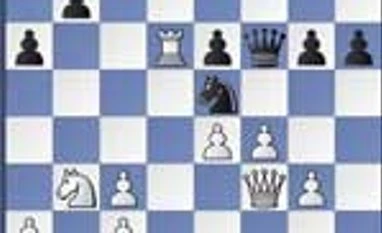
The Diagram (Karjakin,Sergey Vs Nakamura, Norway 2013) is a good illustration of Karjakin's calculating ability. WHITE TO PLAY. It's a razor-sharp position where one or the other attack will break through 24.Qh1! Nc4 25.e5 Qf7 26.Rd4 h5 27.Qe4! b5 Oddly Anand played similarly with Qh1-Qe4 against Topalov. In both games, white came out on top from a very messy position.
Play continued 28.Red1 Rc7 29.Nc5! Forces entry to the seventh rank. 29...Rxc5 Or else, 29...Nb6 30.Nxe6 Qxe6 31.Rd6 - Now white gets the queen and he solves the technical task after that with 30.Rd7 Rc7 Or 30...Qe8 31.Qb7 Rf7 32.Rxf7 Qxf7 33.Rd8+ Kg7 34.Rd7. 31.Rxf7 Kxf7 32.g4! hxg4 33.Rh1 Kg7 34.Qg2 Rh8 35.Rxh8 Kxh8 36.Qxg4 Rh7 37.Qd1 Rf7 38.Qd4 (1-0, 59 moves).
Devangshu Datta is an internationally rated chess and correspondence chess player

 "Chess (#1044)")


 Connect with us on WhatsApp