From around 1570 to 1710, temperatures in the earth’s Northern Hemisphere plunged by an average of about 2 degrees Celsius — roughly the same amount by which the planet’s temperature is supposed to rise under the more catastrophic predictions of our warming futures. Two degrees colder meant a growing season shortened by three weeks. The apocalyptic changes that are coming — bigger storms, higher seas, longer heat waves, more insect-born disease — remain, for now, a task for the imagination. But the impact of those long-ago icy winters, frigid summers and torrential autumns requires no imagination: It’s all recorded in contemporary sources.
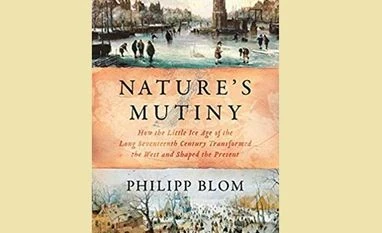
In “Nature’s Mutiny,” Philipp Blom, a German historian, treats this one well-documented period of climate change, the so-called Little Ice Age, as an experiment in what can happen to a society when its baseline conditions, all ultimately dependent upon the weather, are shaken. The premise of treating historical sources as a way of answering current questions is so good that Blom should have stuck to it. He is tempted, however, into making everything new in the 17th century a result of climate change, and this can only be true by so diluting the notion of causation as to render his claim meaningless — or just plain vulnerable.
The initial crisis was food insecurity, much as it will be for us. Hunger hit the countrysides of Europe first. If peasants starved and then abandoned the country for the cities, the aristocrats, who lived off peasant production for both food and wealth, went down with them. People living on the land at least had direct access to whatever food there was; those in cities were dependent on rural surplus reaching them, and when it didn’t, they rioted. They were also pushed into even more extreme measures: During the siege of Paris in 1595 the starving defenders of the city discussed breaking into a cemetery, removing the bones, grinding them into a fine flour and then using it to bake bread.
Resource scarcity stoked violence big and small. This was a century at war with itself: urban revolt, civil war and international conflict, and sometimes all at the same time. The losers were the ordinary people who died in vast numbers or were forced into exile as loathed refugees, also in vast numbers. The big winner was religion: Those who trafficked in biblical warnings about the end of the world got more attention. The most radical, who saw God’s flail in worsening weather, sometimes took matters into their own hands and abandoned Europe altogether to build on some distant shore their shining city on a hill. Few centuries in recent times were as dominated by religious upheaval as the long one that stretched from Luther to Louis XIV. Die-hard secularists take note.
If there is a bright part of the story it’s that crisis forced innovation — or at least removed a bias in favour of doing things the way they always had been done. What we call “research” often came to the rescue: “The most basic proposals for tackling the climate crisis came from gentlemen scholars we would today call botanists and agricultural experts.” Why this occurred in Europe but not, say, in China is an important question that Blom, unfortunately, declines to entertain.
The book is marred by errors of fact. (Montesquieu wrote in the 18th century, not the 17th; the Jewish Pale of Settlement was created in the late 18th century, not the 17th.) It too often reads like a series of potted histories. But the main thrust is well worth pondering: Climate impacts human history. T S Eliot warned in “Four Quartets” that though nature seemed like a “solved” problem, “in the sombre season or the sudden fury” it was a “reminder of what men choose to forget.” Being lulled into forgetting nature is, at least, no longer our problem.

 "Climate change and human history")












 Connect with us on WhatsApp