In the last many years, Mr Debroy has translated several Hindu epics into simple English prose, even though they were originally written in narrative couplets
premium
The Brahma Purana was also written in narrative couplets in Sanskrit
5 min read Last Updated : Mar 10 2022 | 11:08 PM IST
Don't want to miss the best from Business Standard?
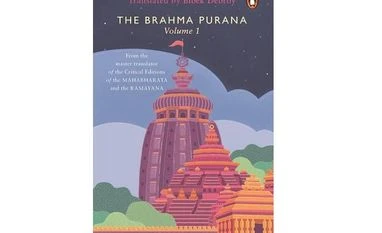
The Brahma Purana: Volume I and II
Author: Bibek Debroy
Publisher: Penguin Books
Pages: 564 and 506
Price: Rs 599 each
Bibek Debroy has produced yet another exquisitely crafted English translation of a Sanskrit classic. The Brahma Purana is one of the most revered and sacred texts in Hindu religion. In two volumes and over 1,000 pages, Mr Debroy’s translation of what is also called the Adi Purana (or the original Purana) brings alive the many myths and legends surrounding Hindu gods, traditions, customs and ways of living. To enjoy this book, however, you have to be either a believer in the idea of Hindu cosmology or have an inquiring mind to decipher Hinduism’s central religious beliefs.
Wendy Doniger, eminent Indologist, believes that the Puranas have traditionally dealt with religious developments that occurred between about 400 and 1500 BCE. She says the topic covered by these Puranas include “customs, ceremonies, sacrifices, festivals, caste duties, donations, the construction of temples and images, and places of pilgrimage.” Reading Mr Debroy’s translation will confirm that The Brahma Purana is no different and, significantly, its choices of subjects and religious issues make it an interesting read.
Thus, there are sections in the second volume that explain in detail the final rites of passage for a Hindu or the various rituals that need to be performed by him or her in memory of the dead. A Hindu is traditionally made to go through many rituals after a death in the family, without often comprehending their significance or relevance. These sections explain the context in which such ceremonies are performed to the point that even distinguishes the status of the recently dead (Preta) from the ancestors who are long dead. If you are a believer in life or a new world after death, the reasons cited for those rituals will rationalise and strengthen your actions in performing them.
Equally interesting is the account of how sinners are treated in hell. The descriptions of how sinners are made to walk over burning coal reminds you how the idea of the hell is quite universal across most religions. The characterisation of Yama and his assistant, Chitragupta, conforms to the perceptions these two religious personalities have created in popular imagination over time.
Understandably, the descriptions of heaven are not that gripping. The sinner, hell and evil are described in this Purana in a way that excite the ordinary mortal’s imagination far more powerfully than what the staid, virtuous but relatively boring description of heaven can ever hope to achieve. John Milton’s fascination with Satan and his cohorts, describing them far more passionately than even Adam or Eve, was no different.
The section on Yoga stands out in this collection. The elaborate explanation of why Yoga can bring about a holistic turnaround of one’s body and mind should have a global appeal. One wonders if those who propagated the importance of Yoga were influenced by what The Brahma Purana had to say and whether they made its effective use to convince the United Nations to celebrate the International Day of Yoga on June 21 every year. The sections on the Samkhya School of philosophy should satisfy the curiosity of those who want a peek into how the ancient Hindu scriptures viewed as modern a school of philosophy as Samkhya. There is much in this Purana that overlaps with the many stories that feature in the Ramayana or the Mahabharata. The exploits of Daksha, father of Parvati, the dramatic moments of her wedding with Shiva, the subjugation of the Kaliya snake in Mathura and the killing of King Kamsa by Krishna are among the many incidents recounted in this Purana. The exploits of Krishna’s brother, Balrama, are presented in detail, just as geographic descriptions of thousands of Tirthas or holy places in different parts of what seems to be the Indian subcontinent should make the Hindu devout more curious about the many current pilgrim sites. The catholicism implicit in this approach is perhaps one of the reasons The Brahma Purana has a universal appeal. There are no preferences for either Shaivaite or Vaishnavite icons. Both find almost equal prominence.
In the last many years, Mr Debroy has translated several Hindu epics into simple English prose, even though they were originally written in narrative couplets. The Brahma Purana was also written in narrative couplets in Sanskrit. But Mr Debroy has translated it in prose. But the appeal of Mr Debroy’s prose translation is no less than the original. What’s more, he has enhanced the readability of the Purana by imaginatively providing headlines for each section.
Also helpful is the fact that many of the sections are quite short and precise. The headlines and the brief sections help the readers in another way. Each section can be read and understood without any reference to other sections. Instead of being lumped together at the end of the volumes, annotations for difficult words or complex references appear at the bottom of the same page where they originally figure. The Brahma Purana is not the first Purana that Mr Debroy has translated. But this one is certainly more readable than the earlier Puranas that he had translated.




