Identity and popular politics

Mr Fukuyama describes identity as one's true inner self juxtaposed against the outer world of social norms and rules
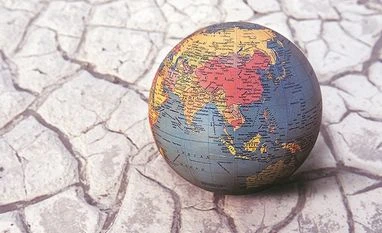
Globe
The meagre funding support that the US had provided to GEF and the Green Climate Fund stands to considerably dry up triggering a run to the bottom
Talmiz Ahmad
Last Updated : Oct 24 2018 | 9:36 PM IST
Identity
The Demand for Dignity and the Politics of Resentment
Francis Fukuyama 
Farrar, Strauss and Giroux, New York, 2018 
218 pages 
Rs 599

Also Read


Ambushed by Brexit and the triumph of Donald Trump in 2016, Francis Fukuyama has set himself the task of explaining the origins and development of populist nationalism that has gripped the western world. Mr Fukuyama brings to this investigation historical gravitas and a pen that lucidly clarifies the most arcane of ideas. 

He sees the 30 years from the 1970s to the 2000s as a period that witnessed a massive expansion of democratic states, together with a significant growth in global trade and investment and consolidation of worldwide economic inter-dependence under the rubric of globalisation. But these remarkable developments favoured the professionally qualified, and “left behind” those less well-educated and now increasingly unemployed as industries closed in the West. 
 
The situation was aggravated by economic crises from 2008 that left millions losing income, home and employment. This led to disenchantment with the liberal world order and generated the ‘politics of resentment’ on the part of the defeated, humiliated and marginalised. This collective anger of a people disenfranchised in their own country shaped contemporary “identity politics”. 

Mr Fukuyama describes identity as one’s true inner self juxtaposed against the outer world of social norms and rules. The identity of the individual imbues him or her with a sense of personal dignity that demands public respect and recognition. When personal identity coalesces with the identity of other like-minded individuals and collectively insists on recognition, "identity politics" emerges, generally projected through fervent nationalism or religious extremism. 


Groups that see themselves as marginalised or ignored insist initially on equality with other groups, but soon begin to see themselves as superior and demand a privileged status in their political order. In this effort, they turn to political leaders who accept that the group has been disregarded or affronted and promise to give them back their dignity. 

Modern liberal polities provide citizens with an “expansive understanding of individual autonomy”. But, several people, buffeted by the “cacophony of competing value systems” have felt alienated, experiencing a crisis of identity and craving a shared identity that would provide cultural comfort and moral clarity. This is the moment, Mr Fukuyama says, in which “the personal [becomes] the political”. 

Mr Fukuyama emphasises that the principal driver of populism that took Mr Trump to the White House is the sense of “invisibility” experienced by white rural communities who felt ignored by liberal commentators and political elites.

His discussion is insightful and convincing when he confines himself to the US and Europe. He loses his way when he applies his conclusions outside his comfort zone. On Islamism and West Asia he gets most things wrong.

He says that the Muslim Brotherhood “threatened to create a dictatorship” in Egypt after winning democratic elections, leading the military to stage a coup. This is totally incorrect. The Morsi government at no stage sought to set up a dictatorship; the military coup was engineered by Egypt’s “deep state”, backed by the Gulf Arab states. Both were terrified that the political experiment in Egypt, at once Islamic and democratic, might prove successful. 
 
He describes West Asian states as having “weak national identity” and explains civil conflicts on this basis. Thus, in Syria “the Alawites were hated and resisted by other groups in the country”. This, too, is wrong. Syria maintained national unity with its diverse population for decades; even now, large sections of the Sunni and Kurdish populations support Bashar al Assad’s government. External role-players — neighbouring Arab and non-Arab states, the US and Russia — have aggravated the conflict by backing different groups in support of their own interests and deliberately scratching at historic fault-lines. The same holds true of Iraq, Yemen and Libya. 

In fact, whatever the circumstances in which national borders were carved in West Asia, the last century has shown that the countries concerned have engendered a strong sense of national identity despite numerous domestic upheavals and external interventions.

Again, Mr Fukuyama says that China, Japan and Korea were able to modernise largely because they had “well-developed national identities”. Modernisation had little to do with these countries’ national identities: Post-war development in Japan and Korea was facilitated by the US after both had been devastated by war. China modernised after several false steps over 30 years in which millions of its citizens were killed; later, its modernisation was successful largely due to its authoritarian order rather than its cohesive identity.

The principal disappointment is that a thinker of Mr Fukuyama’s standing offers little more that platitudes in the chapter titled: “What is to be done?”
 
Asserting that identity politics should be steered back “to broader forms of mutual respect for dignity”, the agenda he suggests is: Counter unwarranted police violence against minorities and sexual assault and harassment at institutions; promote creedal national identities built around the ideas of liberal democracy, and vigorously promote assimilation. His remedy for populist politics is: “Identity can be used to divide, but it can also be used to integrate.”   
 
These suggestions will crash against the rock of electoral considerations as populist leaders mobilise support on xenophobic bases. This is a disappointing even bathetic end to what had started as a fascinating exploration. 
(The reviewer is a former diplomat) 

One subscription. Two world-class reads.

Already subscribed? Log in

Subscribe to read the full story →
*Subscribe to Business Standard digital and get complimentary access to The New York Times

Smart Quarterly

₹900

3 Months

₹300/Month

SAVE 25%

Smart Essential

₹2,700

1 Year

₹225/Month

SAVE 46%
*Complimentary New York Times access for the 2nd year will be given after 12 months

Super Saver

₹3,900

2 Years

₹162/Month

Subscribe

Renews automatically, cancel anytime

Here’s what’s included in our digital subscription plans

Exclusive premium stories online

  • Over 30 premium stories daily, handpicked by our editors

Complimentary Access to The New York Times

  • News, Games, Cooking, Audio, Wirecutter & The Athletic

Business Standard Epaper

  • Digital replica of our daily newspaper — with options to read, save, and share

Curated Newsletters

  • Insights on markets, finance, politics, tech, and more delivered to your inbox

Market Analysis & Investment Insights

  • In-depth market analysis & insights with access to The Smart Investor

Archives

  • Repository of articles and publications dating back to 1997

Ad-free Reading

  • Uninterrupted reading experience with no advertisements

Seamless Access Across All Devices

  • Access Business Standard across devices — mobile, tablet, or PC, via web or app

Next Story



