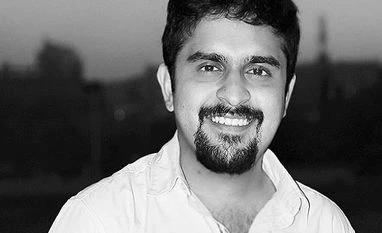
Abhishek Mohurley hails from Gadchiroli in Maharashta. He had more than 10 backlogs in Physics subject while pursuing his engineering, a subject his father holds a PhD in. Coming from a town hit by left-wing insurgency, Mohurley was more interested in writing. His interest piqued when he met a surrendered Naxalite. He decided to bring to life the journey of this Naxalite from a non-decrepit village to taking up arms against his own country. Mohurley, who once considered himself a black sheep in the family, ended up writing his first book in Marathi on a Naxalite. As the book was launched in the market, his family and well-wishers were taken by surprise. He became an overnight celebrity in his village. No one could believe that someone who had failed in studies could one day publish his own work that would strike a chord with the readers. Mohurley is no longer a depressed soul, and delivers lectures across colleges in Maharashtra.
This is just one story. There are several such instances of storytellers, of people with their own stories to share that the Nagpur-based Writers' Rescue Centre (WRC) has been trying to bring to the world. Founded in 2016 by Nikhil Chandwani with the aim to bring the young generation to speak up and share stories that could help create a vision to develop India as well as build a generation of young dynamic leaders, WRC was able to bring together under its umbrella people from all walks of life.
“I put pen to paper in my early teens. I was able to publish my debut novel at the age of 18, wrote nine more books but I was driven to make a difference through social entrepreneurship and so, I took a long pause from personal ambitions and started focusing on developing a Gurukul (mentorship) system for storytellers, depressed, suicidal, introverts, poets alike,” says the 25-year-old founder.
Nikhil Chandwani, founder, Writers’ Rescue Centre
Irked by the negativity towards life had people as young as him in its grips, Chandwani wanted to give them all a platform to share their stories thereby making them embrace the positivity that life has to offer. That’s why Chandwani named his venture “Writers’ Rescue Centre” aiming at the writers who are either unable to reach out or don’t know how to tell their stories to the world. “Writing has many variables. From script writing to a screenplay, book writing, travel writing, political commentary, historical research, technical writing and speech polishing, no field in writing is saturated but people don’t have a definite path,” he says noting how WRC is trying to bridge that.
The organisation works like a Gurukul. A mentor/guru is assigned to a storyteller or an interested writer based on the genre. The mentor teaches them how to write and shape up the story. Daily brainstorming over whatsapp/emails/phone calls are done until the story is ready. Once it is ready, the book is then sent for editing. Once the book is edited, WRC publishes and markets it for writers. “Once enough copies are sold, our students are groomed by another mentor in the art of public-speaking and script-writing based on their interest level,” says Chandwani. This way, the organisation has managed to mentor over two hundred writers with their works. They have also been able to create 30+ TED(x) speakers and as many national award winners across India.
The authors have ranged from a dyslexic writer, Yash Singhania, who emerged from his failures in chartered accountancy to write and publish three books and currently works as a columnist for LA Times and Chicago Tribune to a differently-abled writer called Nikhila Chalamalasetty from Vijayawada. Chandwani takes pride in talking about his students and how he has been able to train all 211 of them. “Through my guest lectures, I was able to reach out to over 30,000 individuals across Asia,” he adds.
Chandwani who identifies himself more as a political enthusiast now than a social entrepreneur and writer and has taken it upon himself to now teach Indians about their own history and how it plays an important role in religion. “For long, religion has been used to divide the people. I want to put an end to it. I want people to be encouraged about everything they encounter in their daily lives,” says Chandwani who is hoping to unite the youngsters through his mentoring.