Investment required in wine
To attract investments the wine business must have the prospect to become broadly profitable, with positive cash-flows over time. Costs of production need to decrease and quality needs to improve
Alok ChandraAmong BRICS countries, India has the lowest per capita consumption of wine: about 19 ml, against 2.26 litres in Brazil, 8.1 litres in Russia, 0.9 litres in China, and 7.0 litres in South Africa. As such, logic indicates that there's no way for the wine industry in India to go but up.
In 2013-14, sales in India were about 1 million cases of grape wines and about 1.3 million cases of 'fortified' wines; if wine consumption here continued to grow at a CAGR of just 15 per cent and 20 per cent respectively, volumes in 2024 would be 4 million and 8 million cases respectively.
The investment required for setting up a winery to make 'fine wines' (that is from wine grapes) varies between Rs 4 crore and Rs 7.5 crore per 100,000 litres (100 KL) - this includes land, building, plant and machinery, and working capital but excludes marketing costs or costs for buying land and setting up vineyards. Investment requirements for cheaper 'fortified wines' would probably be a third of that - say between Rs 1.25 crore and Rs 2.5 crore per 100 KL. Costs for setting up integrated operations (where the vineyards are owned by the producer) will be significantly higher, but that's another story.
It's then simple to work out that the cost of setting up the additional capacity to cater to this demand would be between Rs 18,000 crore and Rs 30,000 crore over the next 10 years. Where will this investment come from, and what needs to be done to facilitate this?
Investment in the wine industry in India has previously been driven either by passion or misguided optimism in the returns available - currently only industry leader Sula is making money and all other domestic wine companies are struggling, with over 50 per cent of the wineries in Maharashtra shut or lying dormant.
FDI (Foreign Direct Investment) in wine would provide many solutions: capital, technology, and wine-making expertise. New wineries would encompass a range of business models: from large mechanised vineyards and industrial-scale wineries producing decent-quality but low-cost wines to boutique wineries producing small quantities of world-class wines, as is already being done by new producers like Fratelli and Krsma.
However, to attract investment the wine business must have the prospect to become broadly profitable, with positive cash-flows over time. This, in turn, means that costs of production need to decrease and quality to improve. Taxes also need to decrease, as do the many regulatory burdens imposed by state excise authorities: high label registration fees, nonsensical inter-state transit fees, and unrealistically low trade. Most importantly, authorities must differentiate between spirits and wines and beer rather than paint all alcoholic beverages with the same brush.
Is anybody listening?
Wines I've been drinking: Sanctum is a club-cum-bar-cum-restaurant that has many facets: a party place Thursday to Sunday, it transforms into a fine-dining restaurant the rest of the week, which is why The Wine Connoisseurs (a new grouping of lovers of good wines and food) hold a pre-plated, sit-down dinner there once a month, with each participant bringing a bottle to taste.
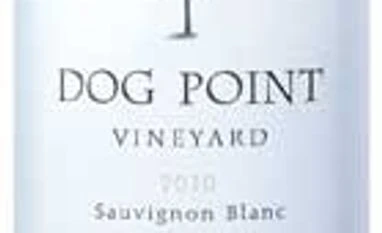
This Tuesday there were just six of us, and of the five wines quaffed what stood out was the improbably-named Dog Point Vineyard's Sauvignon Blanc 2012 from the Marlborough region of New Zealand which one us had squirreled away from an industry visit two years back.
This was a classical Marlborough Sauvignon Blanc: an intense aroma of ripe guava, citrus, and passion fruit with balanced but intense acidity, crisp minerality, and a fine finish. I look forward to when it becomes available in India.
Alok Chandra is a Bangalore-based wine consultant

 "Investment required in wine")


 Connect with us on WhatsApp