Last week, when a mob of cow vigilantes lynched Rakbar Khan in Alwar, Rajasthan, the incident prompted many parliamentarians to demand a law to prevent killings by vigilantes. A small but powerful humanitarian initiative has, however, been questioning whether yet another law will be able to quell the growing number of hate crimes in the country. The alternative they propose is simple, naïve even — to counter hate by spreading the message of love, peace and compassion. Meet the folks at Karwan-e-Mohabbat, a journey of love, who, after kickstarting their campaign in October 2017 with a crowd-funded bus ride across the country to meet victims of hate crimes, are now telling their stories to spread the message of communal peace and harmony. Spearheaded by human rights activist Harsh Mander, the Karwan has journeyed from Nellie in Assam to Behror in Rajasthan, Karola in Gujarat to Mangaluru in Karnataka, to address not only the everyday fears of Muslims, Dalits and Christians, but also the deafening silence of the majority.
The emergent stories from the Karwan are heart-wrenching and yet inspirational. They demonstrate how even in the face of extreme tragedy, it is still possible for love to conquer hate. When Maulana Imdadullah Rashidi of Asansol lost his 16-year-old son, Sibghatullah Rashidi, to a vicious communal riot, he announced the death to his congregation with a rider. “If you love me,” he said, “then I ask from you at this moment only one promise. That with your tongue or with your hand, none of you will cause any harm to any Hindu.” No eye was dry as they listened to his impassioned plea. After ensuring that peace would prevail, the heartbroken father performed the last rites of his son’s mutilated body.
Yashpal Saxena’s story is equally powerful. When his only son Ankit was killed in broad daylight by the family of the Muslim girl he loved, Saxena wasted no time in affirming that he bore Muslims no ill will and even held an inter-faith iftar this year. In doing so, both fathers rejected what Mander refers to as the “doctrine of vicarious guilt” — that individuals must bear the burden of sins — real, imagined and across history, or their community.
Over the past 10 months, Mander and his cohorts have undertaken several such journeys to the homes of the victims of lynching and mob violence. They haven’t been easy. “The extreme cruelty of these acts disturbs me the most,” he says. “Many victims were horribly mutilated and witnesses say that in some cases, children as young as 11 years were part of the mob.”
Mander also found that many of these lynchings were videotaped and shared on social media. “The camera trivialises the killing to a game and by uploading such videos on social media, the perpetrators of these crimes send the message that they know they can’t be touched,” he says. Another peculiar aspect of these lynchings is the complete lack of public compassion; nobody has come to the rescue of the victim being beaten by a mob. And the police has, in almost every single case of lynching, displayed this same lack of compassion.
Compassion is what Karwan is seeking to bring back in the equation. “Our first objective is to condole with the bereaved families and apologise for letting our society degenerate to this depth,” he says. “They need to know that people care about their tragedy.” Second, many of these families need legal assistance that Karwan is attempting to provide. “Thankfully, nobody we’ve approached for help has refused it so far,” he says.
If at all the anti-lynching legislation is tabled, Mander and his cohorts are advocating for two important additions to it — “It must make the dereliction of duty by public servants a punishable offence,” he says. “Many of these killings could have been avoided had the police stepped in in time.” Second, the law must institute mandatory reparatory duties for the state, which could include economic rehabilitation of surviving family members, legal aid, counselling and more.
Meanwhile, unfortunately, the killings continue and the stories keep coming. “We’ll keep telling them,” Mander promises passionately. “We’ll keep telling them till every conscience aches unbearably.”

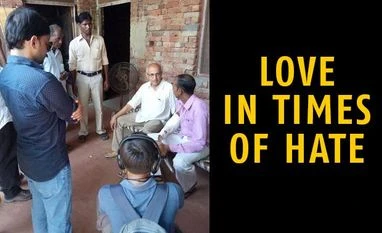 "Karwan-e-Mohabbat is helping families of lynch-mob victims cope with grief")











