Were you mesmerised by the controversial digital humans in 'Rogue One,'? Industrial Light & Magic (ILM)'s achievement in setting a new level of photoreal facial animation impressed viewers and evidently, the effort involved has reaped success. In fact, the same facial performance-capture solving system (developed at ILM by Kiran Bhat, Michael Koperwas, Brian Cantwell, and Paige Warner) will be among the Academy’s 18 Sci-Tech honorees this year.
On February 11, Academy of Motion Picture Arts and Sciences will present awards at Beverly Hills. For India, these awards will hold a special value - as among the award winners is Tamil Nadu's Kiran Bhat, the Kovai engineer.
But, do you know who is Kiran Bhat?
Business Standard brings to you everything you need to know about this 41-year-old techie, who has made the country proud.
1. Kiran Bhat is an alumnus of Stanes Anglo Indian School in Coimbatore
2. Bhat went on to do his double degree in EEE and Mechanical Engineering at BITS Pilani and his PhD in robotics and artificial intelligence from the School of Computer Science, Carnegie Mellon University, Pittsburg.
3. Kiran along with his team from ILM developed the facial performance-capture system.
4. Kiran quit ILM almost a year ago and has started his own venture Loom.ai. His company enables a new era of virtual communication by automatically converting selfies into expressive 3D avatars. The animatable and expressive faces can be used to power applications in VR, gaming, messaging, e-commerce and virtual classrooms for individuals and businesses around the world.
Photoreal facial animation was also used in other movies like Pirates of the Caribbean, Teenage Mutant Ninja Turtle, Warcraft, Star Wars Episode VII and Star Wars Rogue One.
While in Avengers, Hulk was created with Mark Ruffalo, a person who is alive, in Star Wars Rogue One, Peter Cushing was recreated. "We sought help of Guy Henry who studied Peter Cushing's work. He enacted like him and we captured his expressions," said Kiran.
What is Photoreal facial animation technology?
This system enables high-fidelity facial performance transfer from actors to digital characters in large-scale productions while retaining full artistic control, and integrates stable rig-based solving and the resolution of secondary detail in a controllable pipeline.

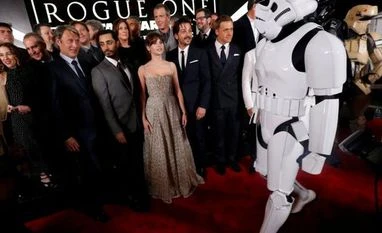 "Meet Kiran Bhat, the Indian American techie who won an Oscar")












 Connect with us on WhatsApp