Maharashtra Governor opens up scenic part of Raj Bhavan to visitors
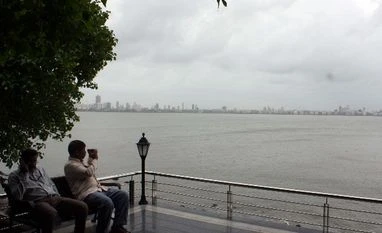
The author visits the Raj Bhavan in Mumbai, a rare green sanctum with a view of gently dancing seawaters, now open to public
Ranjita Ganesan If you visit the Raj Bhavan in Mumbai when a portion of it opens to the public starting September, it is likely no one outside will believe you. Cameras and mobile phones will have to be submitted at the gate, forcing any selfie enthusiast to actually experience a moment without documenting it. A good idea perhaps as this is a rare green sanctum in Mumbai with a view of gently dancing seawaters, and it harks back to something more elementary than technology.
The official residence of the governor of Maharashtra is not fully throwing open its doors, though. It will allow only ten people a day in a select part of the precinct, mainly a sunrise gazing point and a temple. Hopeful visitors will have to register online and pay Rs 25 each. In a move that cinema halls could perhaps take a cue from, Raj Bhavan advises that children below the age of 12 not sign up. This is “in order to maintain the silence and sanctity of the location,” according to spokesperson Umesh Kashikar. The idea, he says, was born out of the current governor’s desire to engage with a curious public. The sunset point near the governor’s residence remains out of bounds for security reasons, so he decided that a similar point be built on the other end of the premises where people can witness the sun rising.
The new viewing gallery is in fact the rooftop of an electricity maintenance room, which has been re-tiled and equipped with benches, lamps and a railing. The centrepiece is a mini pavilion with a seat, flanked by small lion statues. This was finished by the Public Works Department three months ago. The maintenance room was also beautified with paintings by a tribal artist from Madhya Pradesh. The designs draw from the flora and fauna of the area.
The Mumbai Raj Bhavan, located on the southern tip of the city on the Malabar Point, is considered the ‘queen’ of Raj Bhavans in India, according to a pamphlet published by the governor’s office. It overlooks the sea on three sides and boasts a long tract of forests, snakes, 15 peacocks, and at least one visibly nesting pigeon. The path that leads to sunrise point is a cool leafy one. An interesting thing to keep an eye out for here is a small set of graves of the pets of former governors. Some date back to the 1930s. One epitaph for ‘Liddy Love’ says “her tail still wags in our hearts.”
The other attraction is a temple dedicated to a nameless goddess. Some refer to the deity as Sagar Mata or Sakalai Devi. Once every July, around 10,000 people visit this shrine as part of an annual jatra. This is one of the few times the venue had previously opened up to people.
The larger VVIP part of Mumbai Raj Bhavan — with heritage buildings constructed at various points in the 19th and 20th centuries — will stay off-limits for the time being. The governor, CV Rao, hopes to start heritage walks here too but this would require police sanction and heightened security.
For the staff, this public engagement will be a process of learning, says Kashikar. He is focusing on ways to make the two-hour visit from 6 am to 8 am enjoyable for people. There will be yoga mats for those who wish to stretch or meditate. Another idea is to maybe offer tea and biscuits. An attendant, who will receive and watch over guests, will occasionally share some tidbits about Raj Bhavan history with them.

 "Maharashtra Governor opens up scenic part of Raj Bhavan to visitors")

