In this column last fortnight, I wrote about a film -
Lessons in Forgetting - that centred on a protective father and his free-spirited daughter, with the latter's personality brushing against stereotypical ideas about "good Indian girls". Coincidentally, a few days ago, while watching the anthology film
Bombay Talkies - a tribute to 100 years of Indian cinema - it struck me that all four short movies in it touch on the relationship between fathers and their children, as well as on changing perceptions of masculinity and "male roles". And much of this seems tied to a man's ability - or inability - to tell stories and to deal with different types of narratives.
In fact, the very first scene in
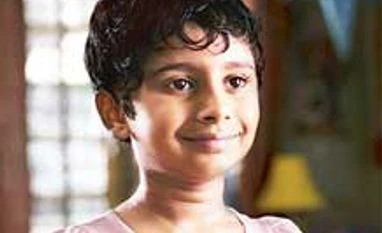
Bombay Talkies - in the short film directed by Karan Johar - has a young man angrily telling his insensitive, uncomprehending father that he is gay, not a eunuch. Later, in Zoya Akhtar's film, another middle-class father - more sensitive on the face of it, but also a man who has clear ideas about what a son should grow up to be - slaps his little boy when he sees him in a girl's clothes. This film ends with an idyllic scene where the boy gets to perform his favourite song "
Sheila ki Jawani" in front of a small but appreciative audience, but beyond this his future is uncertain; it's hard to see him pursuing his dancing ambitions in the long run without a serious conflict with his dad.
Watching that scene, I couldn't help think that exactly a hundred years ago, Dadasaheb Phalke was making films where male actors performed in drag (because respectable women weren't supposed to act in these dubious motion-picture things). This got me thinking about gender roles and the creative impulse. In a world that encourages easy classifications, artists or performers or creative people are supposed to be particularly sensitive, and "sensitivity" in turn - broadly defined - is a trait associated more with women than with men. But think of gender characteristics and behaviour as existing along a continuing line (rather than in terms of a clear male-female divide), and you might agree that when a man performs on stage, or briefly turns storyteller for his child or for a group of people in his train compartment, he is tapping into his existing "feminine" side, or at least cut off from the aggression that society often demands of men. (Those men in Phalke's films - some of them might have felt embarrassed in women's clothes, but it's no stretch to think that the more dedicated actors among them may have felt temporarily liberated from gender expectations.)
Bombay Talkies has a number of characters that are performers or mimics or storytellers, or people who (channeling T S Eliot) prepare a face each morning before going out to deal with the world. In Johar's film, a woman and her husband are living a lie of sorts; one can easily see the little boy in Akhtar's film growing up to do the same thing; in Dibakar Banerjee's film, Purandhar (Nawazuddin Siddiqui) dreams of getting rich through emu-farming while his mundane real-world existence requires him to find a building-watchman job. However, Purandhar has other dimensions: he is a loving father who does household work alongside his wife and is comfortable in the presence of women, hanging about with the ladies of his chawl as they exchange a salty joke - and perhaps these traits are inseparable from his qualities as an actor who brings all his integrity to a bit-part role, and as a storyteller who puts on a silent performance for his little girl at the end. (Banerjee - who is of course a storyteller himself - has said that his own experience with fatherhood informed his treatment of this narrative.)
Finally, in Anurag Kashyap's film about a son who travels to Bombay for a "
darshan" of his father's favourite movie star, I think it is possible to suggest that movie-love has turned both the protagonist Vijay and his father into raconteurs -people who have a feel for the spoken word, for parody, dramatic flow and the right pauses. They are amateur performers, and there is a suggestion that this makes them more attentive, sensitive people too. Perhaps the problem with the fathers in Johar's and Akhtar's films is that never having developed a taste for fantasy and role-playing, they lack the empathy that comes with it.
Jai Arjun Singh is a Delhi-based writer

 "Men who tell stories")


 Connect with us on WhatsApp