My wife and I were speculating about why India received so few foreign tourists. The question arose after we were done oohing and aahing at the Cathedral of Monreale, in Sicily.
This 12th-century building houses large gold-coloured images of Christ and others from the Bible. And it has elegant architectural features, including a cloister. It was all lovely to see and there was a wedding on at the same time, making it even more splendid.
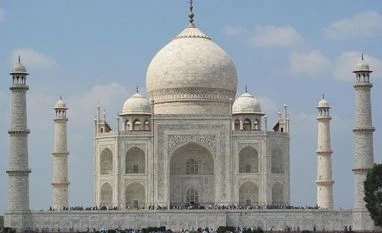
As we were discussing the highlights, during which I’m sure I used a superlative or two, she said “it’s nothing compared to the Taj Mahal”. She is right, of course. We had revisited Agra a few months ago and so the memory of that monument (“a teardrop on the cheek of time,” as Rabindranath Tagore described it) was still fresh.
The Taj is shocking when you actually see it because one thinks one knows it from pictures. However, it can only be understood when seen in person. Two of its aspects are elusive till the time one does. First, the beauty of the details, which no one photograph will capture. And second, the scale. It’s absolutely enormous. The aspect that can perhaps be understood through images is its harmony and symmetry, but even that requires seeing it from its various angles and also from across the river.
It is an exaggeration, but only a slight one, to say that the world is divided into those who have seen it and those who have not. The question, to go back to what we were discussing, is: why can we not get more people to see it and the other wonders of India?
It’s not that we do not have the wonders. My wife and I, not too long ago, spent some time in the temples of Thanjavur and Madurai in Tamil Nadu, and we found them utterly charming. A few weeks ago, we were at the Padmanabhaswamy Temple in Kerala and that was superb as well. And so, just to underline the point, it’s not as if we lack places — truly great, world-class ones — to show off. So then why is tourism so small an industry?
One reason is, of course, that some very special parts of India are inaccessible. The one state in India which can attract wealthy European skiers in winter is Kashmir. But India itself restricts and denies access to people going in, and the constant troubles there also give it a bad name.
The other such place — one that has natural beauty but is inaccessible — is the Northeast. It is difficult to travel there even for other Indians, requiring special passes and not having good connectivity.
For a long time I have also chafed at the fact that we charge foreigners a different sum for entry into monuments. Though this is inherently discriminatory and few will appreciate it, I think it’s not a factor in discouraging people from coming to India. So then what else is there for us to consider?
The Taj Mahal is shocking when you actually see it because one thinks one knows it from pictures. However, it can only be understood when seen in person | Photo: iStock
I can think of two obvious things. The first is that we want to impose our rules on people. My wife and I can enter any church in Europe without restrictions. But many temples in India do not allow entry to foreigners, restricted by boards that say non-Hindus should stay out.
Also, people on holiday do not want to be told what not to eat and what not to drink. It is difficult to have a good time in Gujarat for this reason. We may have become even more rigid about such things over time, which is quite unusual I think.
The second obvious reason is the disorder in India. It can be, and it is, charming to some visitors. But for the most, it is tiresome and can get exhausting. The writer V S Naipaul once observed that India was more appealing to those who came with a return ticket. That is true.
Ask yourself why the Delhi-Agra-Jaipur route is mostly done through guided tours. I mean, a tour where the agency provides a full- time minder for a small group who will take them through the chaos of India. One doesn’t need such a minder or guide even in Japan, where nobody speaks English. In all the decades we have been visiting countries abroad, my wife and I have only ever had such a person with us once, in China.
In India, we would have even fewer tourists if they had to manage their way from the airport.
Unfortunately, that leads us to conclude that this is a problem that cannot be resolved by merely making bigger airports and running “Incredible India” campaigns. The brand isn’t the problem; it is the product. It’s not the sites themselves, but everything around them and leading up to them.
Till we figure out how to be a more approachable and friendly nation, we will have to live with the knowledge that we are denying the world the opportunity to experience a cultural heritage of great quality and beauty. And it is our fault that they are not lining up to see it.