Pashtunwali and Islam

Tilak Devasher's deep study of this ethnic group explains how it negotiates its identity and religiosity in a deeply contested geography
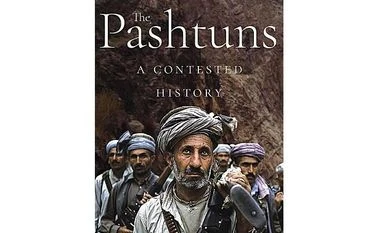
book cover
The Pashtuns: A Contested History
Chintan Girish Modi
6 min read Last Updated : Mar 10 2023 | 7:34 PM IST
Title of the book: The Pashtuns: A Contested History
Author: Tilak Devasher
Publisher: HarperCollins India
Number of Pages: 496
Price: Rs 799

Tilak Devasher, who retired as Special Secretary in the Cabinet Secretariat of the Government of India in 2014, and currently serves as a member of India’s National Security Advisory Board, has been writing extensively about Pakistan in the past few years. After Pakistan: Courting the Abyss (2016), Pakistan: At the Helm (2018), and Pakistan: The Balochistan Conundrum (2019), his latest book is The Pashtuns: A Contested History (2022).

The menacing cover by artist Saurav Das attempts to evoke many of the significant themes – bravery, honour, patriarchy, radicalisation, terror – that come up for discussion in Devasher’s detailed study of the Pashtuns, an ethnic group that holds the status of a minority in Pakistan and majority in Afghanistan while being deeply invested politically and emotionally in the idea of a Pashtunistan beyond these nation states separated by the contentious Durand Line.

The people on the cover could be seen as rugged, heroic, battered or ruthless depending on the gaze of the onlooker. Whether this image merely holds up a mirror to reality, or ends up reinforcing colonial and imperialist stereotypes about Pashtuns is a bit debatable. What is most striking, however, is the harsh geographical terrain and the absence of women in the image. Both these factors have played a crucial role in the history of the Pashtuns.

As Devasher recounts, the strategic location of the Pashtuns has led to invasions from various groups of people over centuries including Aryans, Greeks, Persians, Sakas, Kushans, Hephthalites, Arabs, Mongols, Turks, Mughals, British, Soviets and Americans; and the invisibility of women in the public sphere has strengthened the culture of treating them as property to be used by men in violent power games or as peace offerings to settle disputes.

One of the most significant chapters in this book is the one on Pashtunwali, described as a “tribal code” and “an unwritten set of values, customs and cultural codes that governs routine life”, which is at times in conflict with the law of the land or with Islam itself because it includes not only chivalry and hospitality but also revenge that often ends in bloodshed.

According to Pashtunwali, a Pashtun is required to act with mercy if an enemy comes to his doorstep and asks for forgiveness or if someone in danger asks for protection or safe passage. This book uses the example of Mullah Omar refusing to hand over his “guest” Osama bin Laden to the United States or to “fellow Muslims” in Saudi Arabia and Pakistan. Devasher writes, “Mullah Omar prioritized Pashtunwali over Sharia in defending his decision when the ulema argued that under Islamic principles bin Laden should be handed over for trial.”

The conflict between Pashtunwali and Islam also comes up in matters related to women’s rights. Devasher explains that, according to Pashtunwali, a widow can be remarried to her dead husband’s brother or another close male relative without her consent whereas Islamic law does not allow for women to be remarried to anyone without their explicit consent.

How Pashtuns negotiate ethnicity and religion is a complex matter especially in Pakistan – an Islamic republic – where a large number of Pashtuns live as “internally displaced persons” and are viewed as outsiders who compete for scarce material resources but whose loyalty lies with Afghanistan and not Pakistan. While Pakistan was created as a home for all the Muslims of the Indian subcontinent, the ground reality is that people’s ethnic identities – Punjabi, Bengali, Seraiki, Baloch, Sindhi, Pashtun, Kashmiri – are extremely important to them.

Islam, again, is no monolith. As Devasher points out, a major development in the last few decades is that Pashtuns who live along the Pakistan-Afghanistan border, especially in the former Federally Administered Tribal Areas (FATA), have begun to shift their religious affiliation from “the more tolerant Hanafi Sufi beliefs to the more restricted and militant Salafi interpretation of Islam that is more commonly practiced in the Middle East.”

Devasher’s remarks about the shift from moderate to extremist forms of Islam need to be read in a wider context. Religious extremism is on the rise everywhere in South Asia, not just in Afghanistan, and also in countries where Islam is not the state religion. Where does this leave Pashtuns who look up to Khan Abdul Ghaffar Khan aka Frontier Gandhi as their role model for a politics of non-violence? Devasher’s book leaves the reader to reflect on this important question without providing a neat or clear answer.

To enable this enquiry, he writes not only about the pre-Islamic history of Pashtunistan, the Great Game, and the War on Terror but also the resurgence of the Taliban, the emergence of the Pashtun Tahafuz Movement, and the recruitment of Pashtuns in Al Qaeda and the Islamic State Khorasan Province. In his book, Pashtuns come across as pawns, victims as well as perpetrators. While he must be applauded for his efforts to foreground how Pashtuns see themselves, he ends up highlighting mostly what Pashtun men have to say about their history.

A more inclusive history of the Pashtuns would have drawn on the contributions of Pashtun women in defending Pashtunistan against the onslaught of marauding armies, and learnt from the experiences, perspectives and achievements of contemporary Pashtun women in Afghanistan, Pakistan and the diaspora who are putting their lives on the line and fighting the Taliban. These are writers, activists, filmmakers, diplomats, artists, politicians, and students.

Devasher ends the book on a hopeful note. He is confident that Pashtuns in Pakistan and Afghanistan will rise above “internal differences” and resist not only “foreign interference” in their affairs but also extremism sponsored by the Pakistani state. He does not say much about India’s future role, and whether it will be welcomed or rejected on both sides of the Durand Line. Another missing link in this book, which one hopes to see substantially addressed in a future edition from Devasher, is how minorities in Afghanistan view Pashtun dominance.

One subscription. Two world-class reads.

Already subscribed? Log in

Subscribe to read the full story →
*Subscribe to Business Standard digital and get complimentary access to The New York Times

Smart Quarterly

₹900

3 Months

₹300/Month

SAVE 25%

Smart Essential

₹2,700

1 Year

₹225/Month

SAVE 46%
*Complimentary New York Times access for the 2nd year will be given after 12 months

Super Saver

₹3,900

2 Years

₹162/Month

Subscribe

Renews automatically, cancel anytime

Here’s what’s included in our digital subscription plans

Exclusive premium stories online

  • Over 30 premium stories daily, handpicked by our editors

Complimentary Access to The New York Times

  • News, Games, Cooking, Audio, Wirecutter & The Athletic

Business Standard Epaper

  • Digital replica of our daily newspaper — with options to read, save, and share

Curated Newsletters

  • Insights on markets, finance, politics, tech, and more delivered to your inbox

Market Analysis & Investment Insights

  • In-depth market analysis & insights with access to The Smart Investor

Archives

  • Repository of articles and publications dating back to 1997

Ad-free Reading

  • Uninterrupted reading experience with no advertisements

Seamless Access Across All Devices

  • Access Business Standard across devices — mobile, tablet, or PC, via web or app

Topics :BOOK REVIEW

Next Story



