TV series based on geo-politics are usually for people who don’t know the difference between Shia and Sunni and don’t have the inclination to know it either. A prime example is the American series Homeland, which is good, simple-minded fun with wham-bang action, and whose protagonist suffers from a superiority complex, something US citizenship bestows automatically, I guess.
However, a couple of international series that I devoured recently show that apart from showing action with style and brio, there can be decent dialogue around it. Eric Rochant’s French TV series The Bureau is more of a talk fest than a framework for mindless action crisscrossing whole Europe and Arab nations. Imagine a modern-day John le Carré novel set in Paris written by someone who knows his Samuel Huntington from his Ben Taub and you have this riveting series. Set in the DGSE, the country’s external intelligence agency, the series has Mathieu Kassovitz as its most accomplished mole whose mission in Syria gets precarious for the agency on multiple levels. The most beautiful thing about this irresistible series set during the Hollande regime is that it will appeal to those who pore over the reportage from places of iniquity in The New Yorker, Der Spiegel, the New York Review of Books and other such esteemed publications.
Nothing in The Bureau seems straight out of the Kathryn Bigelow playbook and nuances are given the respect they deserve. Compared to this Rembrandt-esque work, Zero Dark Thirty comes across as a Damien Hirst monstrosity. Even the torture scenes are more Cold War than Abu Ghraib. Why does there have to be waterboarding when truth can be extracted by getting the person drunk on a full bottle of the finest whisky? There’s also deadpan humour, which makes the series doubly delicious.
“Al Qaeda spend more time on Koran and less time on Twitter, unlike ISIS,” says an Al Qaeda sympathiser. All the operatives have their code names from Tintin.
Of course, unlike The Bureau, historical inaccuracies abound in Fauda (chaos in Arabic). In the second season, it gets a little more far-fetched with ISIS raising its dreaded hood even in Ramallah and Nablus. The show is also very biased in its myopic view of Palestine while completely ignoring the ham-fisted way the Israeli state treats the Arabs. Anyone who takes even a cursory look at news knows that Israel doesn’t hold any punches when dealing with protesting Palestinians.
But Fauda’s writers are busy painting them as evil and their sympathy lies with the IDF snipers. The series is gorgeously mounted and rompingly performed, but what could have been a topical, intelligent drama becomes dazed and confusing.

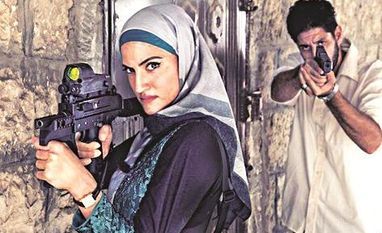 "Strife and grief")












 Connect with us on WhatsApp