Sudhir Joshi was sacked over Nehru, Sonia articles
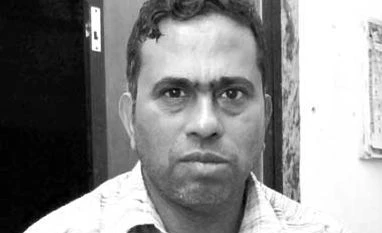
Ranjita Ganesan It was only when he was fired as content editor of the Congress Darshan magazine that Sudhir Joshi found out he had ever held the post. After it came to light this week that articles critical of Jawaharlal Nehru and current party president, Sonia Gandhi, had appeared in the party mouthpiece, its editor and Mumbai Congress head, Sanjay Nirupam, came under fire. Blame for the contentious pieces was quickly attributed to Joshi and he was stripped of his responsibilities.
A Mumbai tabloid recently reported about a six-page essay by an unidentified author that suggested that Nehru, the country's first prime minister and Congress icon, was to blame for the Kashmir, China and Tibet conflicts because he did not pay heed to the advice of fellow freedom fighter and former home minister Sardar Vallabhbhai Patel. Another article in the magazine, which was published in early December, is said to have referred to Gandhi's father as a "fascist soldier". Several Bharatiya Janata Party members celebrated the articles as something of an own goal by the Congress. Nirupam was compelled to apologise for the error and pledge action against the author of the controversial articles.
Joshi switched off his phone and travelled to his native town in Pune after he was sacked. On Twitter and other social media platforms, people - including some politicians - reckoned he had been made the fall guy because his name does not appear anywhere in the magazine. The little-known journalist, who has worked for various Hindi publications, does not fully confirm or deny that he was responsible for the "goof-up". He maintains that he wrote and e-mailed the articles to a senior colleague, but adds that they were not checked and edited as they ought to have been.
He speaks reluctantly, reveals little and his eyes follow any notes being taken. Joshi rents a modest one-bedroom apartment in a Virar
chawl, where doors often stay open and the neighbourhood's children wander in and out of homes. Pictures of deities, a tailoring machine and a computer table form the decor of his living room. When referring to the controversy, he points to a small box-type TV set topped with a pink crocheted cover as if it were the source of all the debate. He is worried about the repercussions the news could have for the safety of his family and career prospects. "The party took whatever action it felt was right. I just want discussion on the subject to end," he says.
The
Congress Darshan stint was not one he had aimed for. He took up the work two months ago, after a small Hindi magazine he had curated closed down. The party mouthpiece, with no more than 500 copies, was meant for circulation mainly among its workers. He suspects the matter was blown up by those within the party who had problems with Nirupam. He had no appointment letter, identity card or visiting card to show for the job. There was no office or meetings. Articles were e-mailed and he was paid for them.
So, were the views expressed his own and did he not expect them to ruffle feathers? "They were historical write-ups and my reference point was the internet," says Joshi. "Since my name does not appear in the articles, they cannot be treated as columns or opinion pieces," he adds. A senior colleague - who looked after the Marathi edition and had long been with the Congress - was responsible for printing dummy copies and making sure they toed the Congress line, but he did not do so, says Joshi. "The article is in praise of Patel, who was also from the Congress. Then why are they angry?" he adds.
In his 25-year-long career so far, Joshi has served as copy editor or writer in various publications, including newspapers
Dainik Bhaskar and
Dainik Jagran and the Sanskar magazine. Some copies of the bright magazines are carefully preserved in his home. Among them is the slim tainted volume of
Congress Darshan, each page of which bears at least one passport-size image of Gandhi or pictures of her waving or folding her hands in a
namaste. He declines to part with it since it is the lone copy in his possession. Joshi, who is working on a biography of Anup Jalota, closes the conversation with a casual enquiry about job openings.

 "Sudhir Joshi was sacked over Nehru, Sonia articles")


 Connect with us on WhatsApp