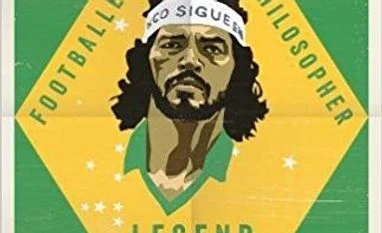
On the pitch, however, Sócrates was both. He possessed the I-make-everyone-better virtuosity of Cantona and the defender-circling finesse and hubris of Best — a utopian world that joyously played out first on the sun-soaked streets of Ribeirão Preto in Sao Paulo, and then all across the world.
His personality was more complex. Football was just a hobby, celebrating goals — sometimes truly scintillating ones — wasn’t his thing, and friends would often be astounded at how quickly he could go from guffawing to discussing gravely serious matters, and then go back to making jokes again. And despite scoffing at all varieties of conformity, in the end, his own life turned out to be one despairing, drawn-out cliché.
In a somewhat protracted prelude to some of the more entertaining passages of the Sócrates story, Downie makes one thing abundantly clear: Sócrates was different. A self-styled mutineer, he hated training and would often fake niggles to swap the ordeal of the pitch for the leisure of the massage table. So much so that at Botafogo-SP, his first professional team, Sócrates quickly acquired the reputation of being a “first-half player” who piteously faded away in games owing to an obvious lack of stamina.
His father, a studious tax inspector who had slogged his up in the country’s financial hierarchy, was perhaps the harshest critic of such indolence. Once, Sai Raimundo’s loathing of his son’s lethargy played out in full public view. “One Sunday, he gave his son so much abuse that a small posse of fans threatened to give him a special beating. Sócrates was Botafogo’s star player and the hard-core supporters didn’t want him abandoning the club because of one over enthusiastic boo-boy,” writes Downie. A bashing was averted after some of Sócrates’ friends intervened.
Downie also underscores how medicine was Sócrates’ sole obsession and he would often sit in a corner and bury his head in books even as his teammates chatted and discussed football in the dressing room. In a famous incident, he once turned up for a game against Corinthians straight from university, dressed in a white coat with medical bag in hand. After being hurried in, Sócrates threw on his strip in the tunnel and was on the pitch the very next minute.
Downie brilliantly elaborates why clubs and coaches granted him such leeway: he was magic on the pitch. Sócrates’ style was best exemplified by an unfathomable intelligence that helped him operate on a different wavelength and see things on the pitch others just couldn’t — attributes often grossly undervalued in football. Such impalpable qualities — Andrea Pirlo and Xavi both come close — are rare to find in the modern game. Amazingly, the scrawny frame and the awkward gait added to Sócrates’ allure. And, he scored heaps of goals for a player who was technically a deep midfielder.
Expectedly, the highlight of the book comes in the form of Downie’s narration of Brazil’s crestfallen 1982 World Cup campaign, where the likes of Sócrates, Zico and Falcão formed a part of the unfortunate 11 that went on to become “the greatest-ever team not to win the World Cup”. Downie manages to recall every single detail, right from Sócrates’ ideas for the way he should lift the trophy to the dressing room tears that followed the unspeakable loss against Italy that knocked the seleção out.
In the year running up to that World Cup, Sócrates, largely apolitical in his youth, kick started something that came to be famously called the “Corinthians Democracy”, where everyone had a say in the way the club was run — the kit man enjoyed the same power as Sócrates, the captain of Brazil, himself. A melting pot of writers, politicians and activists, Sao Paulo’s intellectual propensities had clearly caught Sócrates’ fancy. “The players were encouraged to discuss their problems openly, whether it was about money, tactics, playing time or personal issues,” writes Downie.
But Sócrates didn’t enjoy success wherever he went. Towards the end, Downie mentions Sócrates’ harrowing time at Fiorentina, where he awfully failed to come to grips with the hyper competitiveness of the Serie A.
Its longish prose and some unnecessary details aside, Doctor Sócrates is an enticing, comprehensive biography that the legend of Sócrates truly merits. As Downie shows, Sócrates was at times dispassionate and erratic, but never dull. It’s safe to say that he wouldn’t have lasted a single day had he been playing today, but in the money-obsessed, politically correct world of modern football, we perhaps don’t quite deserve him, either.
One subscription. Two world-class reads.
Already subscribed? Log in
Subscribe to read the full story →
Smart Quarterly
₹900
3 Months
₹300/Month
Smart Essential
₹2,700
1 Year
₹225/Month
Super Saver
₹3,900
2 Years
₹162/Month
Renews automatically, cancel anytime
Here’s what’s included in our digital subscription plans
Exclusive premium stories online
Over 30 premium stories daily, handpicked by our editors


Complimentary Access to The New York Times
News, Games, Cooking, Audio, Wirecutter & The Athletic
Business Standard Epaper
Digital replica of our daily newspaper — with options to read, save, and share


Curated Newsletters
Insights on markets, finance, politics, tech, and more delivered to your inbox
Market Analysis & Investment Insights
In-depth market analysis & insights with access to The Smart Investor


Archives
Repository of articles and publications dating back to 1997
Ad-free Reading
Uninterrupted reading experience with no advertisements


Seamless Access Across All Devices
Access Business Standard across devices — mobile, tablet, or PC, via web or app
)