Around November, when D V Ramakrishna Rao and S Clarance Krupalini were trying to submit their daughter Spandana’s form for Class X boards, they couldn’t complete the process online. The problem here was a particular box that asked for the child’s religious identity: an issue Spandana’s parents have been battling for seven years now.
“There are six religions listed on that form, the seventh is ‘others’. But that comes under religion too. We don’t practice any religion at home, so why should we be ticking ‘others’ when the correct term is ‘no-religion,’” says Hyderabad-based Rao.
In January, the couple initiated Public Interest Litigation asking for a provision where one could choose to have a no-religion, no-caste identity. Last week, the Hyderabad High Court sent notices to the governments of Andhra Pradesh and Telangana to address the issue.
“We filed this PIL because we are not the first people to face this problem, and we certainly won’t be the last,” says Rao.
Browse through the comments on a petition the couple has started on Change.org to garner support and you’ll find that the comments on the petition are largely by people who have faced a similar dilemma and have been forced to ink a religious identity they didn’t subscribe to.
The right to choose religion is as significant as “the right to not choose religion,” notes Krupalini. While she comes from a Christian background and attends Church regularly, Rao has Marxist/Communist leanings. “Lal Salaam to Comrade Karl Marx who has given a theoretical weapon to the oppressed masses of the world to fight against all kinds of exploitation,” reads one of Rao’s posts on Facebook.
In the Rao household, Christmas is celebrated with Krupalini’s family and Hindu festivals with Rao’s side of the family. The Ramayana, Mahabharata, Quran and Bible sit alongside Marxist literature in their home.
It was largely their younger daughter’s admission in 2010 that persuaded the couple to take concrete action. A school had rejected Sahaja’s application to Lower KG after her parents noted her background as “non-religious”. “Some people follow procedures very strictly. That’s a good thing: because of their actions alone we can question and try to change things,” says Rao.
The couple then approached the Andhra Pradesh High Court which ruled that Sahaja’s school application couldn’t be rejected on grounds of non-disclosure of religion of the parents or their ward.
“The question of identity is not a new one, so it’s actually very surprising that no one has filed such a petition in India before,” says D Suresh Kumar, the advocate representing the family.
“We have a large number of people who hold no religious beliefs, but they’ve always led their own individual lives. They’ve never involved the government or tried to bring about a change through legislation or a legal battle,” he adds, highlighting the significance of the family’s cause.
According to the 2011 census, the number of “Religion Not Stated” people is 2.87 million. “They must be categorised scientifically. Right from birth to death, wherever the need be, there should be an option to say no-religion and no-caste,” say the couple, adding, “Our problem isn’t with schools, it is a matter of policy.”
While Rao is in the Telangana agricultural commission, Krupalini works with the Andhra Pradesh’s government’s agricultural department; they were colleagues who went on to get married despite “tearful and emotional” discussions with some of their family members.
“In the 10 years I’ve known them, they have always been a very progressive family,” notes Kumar, their advocate. “Ramakrishna is very passionate about his ideals but I’d say Clarance is the more courageous of the two: she’s a believer and still advocates that one must have the right to choose or not choose religion,” he adds.
While Spandana appears for her exams and the question of her identity hangs in balance, the Rao family realises that this issue may rise again in four years, when Sahaja sits for the same exams.
“Over the last seven years, we’ve got overwhelming support from a number of democratic organisations and individuals. And it’s heartening to see how many Indians feel that this is the need of the 21st century. We’ve seen some democratically progressive moves recently, like passport rules being changed for single parents, so this is possible too,” says Rao.
The family’s petition on Change.org has found over 3,000 supporters in the past few days itself.

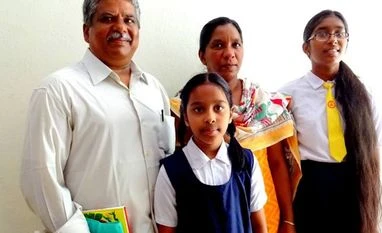 "The couple that is fighting for right to reject religion")












 Connect with us on WhatsApp