The ethics of inequality

It's not good enough to be rich if you are a Dalit as well
Narendar Pani
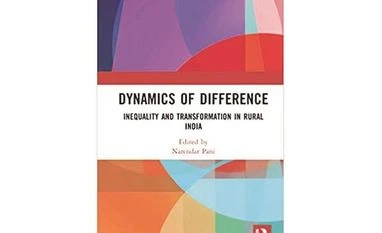
Dynamics of Difference: Inequality and Transformation in Rural India; Author: Narendar Pani; Publisher: Routledge; Pages: 269; Price: Rs 911
T C A Srinivasa Raghavan
4 min read Last Updated : May 20 2022 | 12:36 AM IST
Edited volumes can only be described. But before that, let me say that this is a seriously good book because it relies on a variety of intellectual traditions. That enriches the collection. It is, if you will, “inclusive” in its choices.

Narendar Pani, who is an economist and a professor at the National Institute of Advanced Studies in Bengaluru, as also a former colleague in journalism, makes a crucial point and uses the essays in this book to illustrate it. This is that inequality isn’t just economic because the well-off can face it socially as well. It’s not good enough to be rich if you are a Dalit as well.

To quote: “These battles over specific inequalities… lead to the fragmentation of the approach to inequality… it is obvious that specific inequalities do not operate in isolation… a Gini coefficient of income inequality is not comparable to a measure that estimates violence on the basis of caste or race and a decline in the Gini coefficient is no guarantee of decline in caste or racial violence”.

That’s the focus of the book, that inequality has many manifestations. Ergo, says Dr Pani, it’s important to investigate how these different inequalities operate in relation to each other. Thirteen essays in this book are devoted to that endeavour. The first defines the problem. The last sums it all up. The starting point is the enormous transformation that has taken place in rural India in which nearly 10 million cultivators have moved out of agricultural occupations. If you count their families too, the number may well be around 50 million. That’s a lot of people.

What’s been their experience of inequality, both economic and social? That’s what these essays try to find out. What emerges is quite revealing. Basically, Indian prejudices have no competition anywhere else in the world.

Dr Pani and Co introduce a new aspect of inequality in India, the ethical dimension. They call it vulnerability. This arises out of intangible factors such as caste and gender as opposed to tangible ones like assets. They say whereas the latter can be addressed through redistribution, the former are nearly impossible to solve. Social exclusion carries on regardless of what “material” approaches.

A second new aspect that Dr Pani and his colleagues introduce is intrapersonal inequality caused by the changes in a person’s economic circumstances. They give farmers’ suicides as a consequence of this type of inequality. The same thing, conceptually, would be true of super rich gamblers too, I think.

But the authors here are discussing the super poor who have to move between village and city, and the many ways in which this movement affects them. To cut a long — and regrettably abstruse — story short, the authors are saying what a person experiences depends on where he or she sits or stands.

Inequality and vulnerability, thus, become both subjective and temporally variable. But again that’s true of all migrants, everywhere and over time. Indian rural folk are not a special exception. Amitav Ghosh’s Ibis trilogy, although categorised as fiction, says the same thing.

One type of inequality arises when someone enjoys state patronage. This could be anyone, really, but the book describes a village near Nagpur where a corporate entity starts farming. It has its own private lake enabled by the permission from the government.

The researchers quote a large farmer in the area as saying “He has water in his lake, we do not. He got permission to build his private lake, we don’t. If we take water from the river even during the monsoon months, they confiscate our motors but nothing happens to them”.

And so on. The volume provides several such examples that illustrate the point that inequality isn’t just about how much someone earns. It’s also about his or her life experiences. The thing is, you can take remedial action only about income.

Dr Pani says in his concluding chapter “In treating inequality as differences that are ethically unacceptable, this book was initially driven by the need to overcome the fragmentation of debates on inequality in India.”

Thus, the key contribution of this volume is to introduce ethics into the otherwise dry debates on Gini coefficients, job reservations etc. That, says the message from this book, isn’t good enough. If you really want to understand rural transformations, you need to keep differences in mind.

One subscription. Two world-class reads.

Already subscribed? Log in

Subscribe to read the full story →
*Subscribe to Business Standard digital and get complimentary access to The New York Times

Smart Quarterly

₹900

3 Months

₹300/Month

SAVE 25%

Smart Essential

₹2,700

1 Year

₹225/Month

SAVE 46%
*Complimentary New York Times access for the 2nd year will be given after 12 months

Super Saver

₹3,900

2 Years

₹162/Month

Subscribe

Renews automatically, cancel anytime

Here’s what’s included in our digital subscription plans

Exclusive premium stories online

  • Over 30 premium stories daily, handpicked by our editors

Complimentary Access to The New York Times

  • News, Games, Cooking, Audio, Wirecutter & The Athletic

Business Standard Epaper

  • Digital replica of our daily newspaper — with options to read, save, and share

Curated Newsletters

  • Insights on markets, finance, politics, tech, and more delivered to your inbox

Market Analysis & Investment Insights

  • In-depth market analysis & insights with access to The Smart Investor

Archives

  • Repository of articles and publications dating back to 1997

Ad-free Reading

  • Uninterrupted reading experience with no advertisements

Seamless Access Across All Devices

  • Access Business Standard across devices — mobile, tablet, or PC, via web or app

Topics :InequalityBOOK REVIEWDalitAmitav Ghosh

Next Story



