The marriage plot
I have three movie recommendations for anyone below 40 who wonders how long-haul marriages work
J JagannathI have three movie recommendations for anyone below 40 who wonders how long-haul marriages work. These movies told me that despite the really long span of companionship, big secrets tend to get buried, lots of things remain unsaid and the relationship is ever evolving. My first exhibit is the Mahesh Manjrekar-directed Marathi movie,
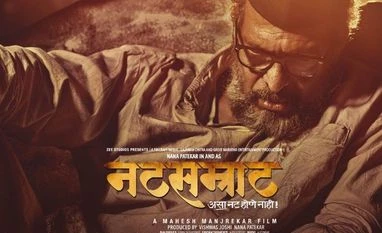
Natsamrat. It is about a theatre stalwart (Nana Patekar as Ganpatrao Belwalkar) who deals with depredations of old age along with his wife (Medha Manjrekar as Sarkar).
After announcing his departure from the stage, Belwalkar decides to give away his entire property to both his children, only to find out that they are not as devoted to him and his wife as they ought to be. The poignancy of the movie draws as much from its source (the namesake classic play by V V Shirwadkar) as much as the crackling chemistry between the lead couple. There is a scene where Sarkar asks her famous husband about his sexual conquests in his heyday in a very playful manner. With nary resentment in her voice, she asks her husband for the names. A visibly mortified Ganpatrao deflects it with a lovely couplet about her being the anchor of his life. The way she kept the household going while he was living a culturally enriched life makes her the Vera (Nabokov) to her Vladmir of a husband. The heartbreaking climax is just the kind of start my movie-watching year needed.
Someone who wished she didn't know certain things about her husband's (Tom Courtenay as Geoff) past is Charlotte Rampling's character of Kate Mercer in Andrew Haigh-directed
45 Years. This carefully textured British drama is about a couple nearing their 45th wedding anniversary, which looks well set to be torpedoed when it unravels that the body of Geoff's first love has been unearthed after all these years. The movie, based on the short story
In Another Country by David Constantine, moves at a glacial pace and is laced with razor-sharp moments. One day, her husband tells Kate how much he appreciates her existence in his life and 24 hours later, he tells her that they wouldn't have been together at all if his first love hadn't died. The facial contortions of Rampling, who is a major contender for the Oscar honour this year (rightly so), gave me the proverbial chill down my spine.
On the other end of the spectrum was my recent DVD purchase, a Bengali movie called
Bela Seshe, which is directed by Nandita Roy and Shiboprasad Mukherjee. The movie, released in May 2015, brought back Satyajit Ray's iconic Ghare Bhaire pair of Soumitra Chatterjee and Swatilekha Sengupta. It plays out almost like an Alice Munro short story that was never published. After completing 49 years of marriage, Biswanath Mazumdar (Chatterjee) decides to divorce his wife Aarti (Sengupta), much to the shock of his children and their spouses. He believes that the marriage was never passionate and more of a quotidian affair and they both sleepwalked through it for nearly five decades. This kind of a storyline is nearly verboten for Indian cinema and the director duo deserve the world for their bold attempt.
All three movies are richly imbued character dramas and have gimlet-eyed observations about marriages that have survived a handful of decades. In
Bela Seshe, Chatterjee's character becomes aware of quite a few things about his wife when the judge presiding over the divorce case suggests them to take a vacation and reignite their passions. In
45 Years, Geoff doesn't stop talking about his first love with his wife, who exudes a disposition that she would rather stab her bowels out than listen to one more detail of that person.
In
Natsamrat, Vikram Gokhale, who fabulously performs as Patekar's friend and contemporary, cries over his wife's dead body and wishes he could have spent more time with her. Sengupta's character in
Bela Seshe wishes her husband would die before her because he's virtually incapable of taking care of himself, a massively radical thing to say on an Indian screen.
All these movies deserve to be watched one Sunday afternoon, back-to-back. And if you need a palate cleanser after that binge-watching, look no beyond Roger Michell's ridiculously charming Le Week-end.

 "The marriage plot")


 Connect with us on WhatsApp