A new book on the life and works of V S Gaitonde explores the influences on his art, his personal relationships and the deeply private artist who preferred to stay a loner
VASUDEO SANTU GAITONDE SONATA OF SOLITUDE Author: Meera Menezes Publisher: Bodhana Arts and Research Foundation Pages: 248 Price: Rs 5,500
For a 248-page hardbound book, Vasudeo Santu Gaitonde - Sonata of Solitude, is a rollicking fast read and a fascinating look at the life of "perhaps the boldest artist of the Progressive generation", as Arun Vadehra, a personal friend of Gaitonde, puts it.
Like the hero of a bildungsroman novel, Gaitonde studied art against his father's wishes - a rift that never healed. He won a scholarship to study art in New York and came back to find that his fiance had ended the engagement. He broke all links to his family and moved to New Delhi where he lived a fairly restricted life filled, like his art, with silence and solitude in a one-room rented apartment. Here he produced only six to eight paintings a year. In the mid-1980s, he had an accident that affected his spinal cord and neck so badly that he couldn't paint for eight years. He created small works on paper instead. Even after recovering, he produced a handful of paintings till his death in 2001. Meera Menezes writes that friends such as Ram Kumar sent dabbas of food to him daily as he convalesced. Kumar also wrote a compelling argument to the Kalidas Sammelan Award jury to award Gaitonde in 1990 because the Rs 1 lakh prize money would be a huge help to the artist.
But, largely due to a 2014 retrospective at the Solomon R Guggenheim Museum of Modern and Contemporary Art in New York, "Gai", as friends affectionately called him, is now the most valuable modern Indian artist at auctions.
Familiar figures from the art world such as Kekoo Gandhy, M F Husain, S H Raza, Ram Kumar, Nalini Malani and Sharon Lowen float through, besides less familiar names such as Bal Chhabda. But you are left wanting more details about why he left Mumbai (then Bombay) and cut his family off or the nuances of his relationship with his fiance and Lowen. Malani says in the book, "Progressive artists like Gai didn't engage sufficiently with the local milieu… instead locking themselves up in an ivory tower and squandering the opportunities to contribute to a distinctive Indian voice." But this isn't explored further either. "Writing this book has been like putting the pieces of a jigsaw puzzle together. Gaitonde did not feel it necessary to be more accessible, either in his personal life or in his art. And close friends were few and far between, and many of them are no more," writes Menezes.
However, this is just the first book of a three-part series. The other two books and a documentary will come out later in the year. The second volume, Sonata of Light, positions Gaitonde within a watershed moment of contemporary Indian art. The final book, Sonata of Consciousness, will offer a comparative study between Gaitonde's works and the philosophies that surfaced in visual art during this period worldwide. The accompanying documentary will feature interviews with family and friends such as Krishen Khanna.
M F Husain, Krishen Khanna, Ram Kumar and Gaitonde
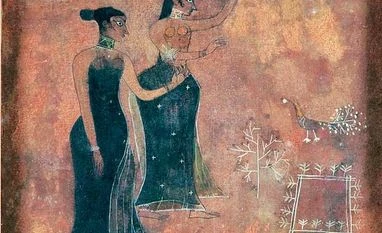
This detailed glimpse into the introverted artist's life 15 years after his death helps answer many questions about his paintings. It also dwells on the influences on his work, which included Jain, Rajput and Mughal miniatures, indigenous art, abstract expressionism and Chinese philosophies. But it's not enough. I want more about an artist that Vadehra says even the other Progressives revered as a "Master". "Even though many of his fellow artists may not have mimicked his style outright, the traction of Gaitonde's purity stayed with them."

 "The master of masters")


 Connect with us on WhatsApp