Italy is both the world’s largest producer as well as the largest exporter of wine. In 2015, the country churned out 4.95 billion litres of wine, but consumed only 2.05 billion, leaving about 2.9 billion litres surplus.
All 20 districts in Italy produce wine, with the grapes (and the wines produced there) all differing from one another. This is surely due to the country’s geography. The Italian “boot” has a backbone in the Appenine mountains that run from the northern plains right down to the toe, and continue into the Sicilian hills. While their highest points are a modest 6,000-7,000 ft, they rise from sea level and, as such, have divided the area into distinct geographies and viticultural diversities.
Wine has been produced in Italy since, at least, the 8th century BCE and flourished with the expansion of the both the Republic and the Roman Empire under the Caesars.
Italy has three key wine-making regions:
Tuscany: Called “Toscano” in Italian, this is the area west and south of Florence in central Italy and home to the Sangiovese grape from which “Chianti” is produced. To be termed “Chianti”, a wine has to have at least 75 per cent Sangiovese; Chianti Classico is applied to wines produced in the core 10 square km area.
The area is also home to “Super Tuscans”: very high-quality wines that do not follow the 75 per cent rule laid down by authorities. The first Super Tuscan was Sassicaia (1968), followed by Tignanello (Antinoti 1971). Well-known labels today include Solaia (Antinori), Camartina (Querciabella) , Ornellaia, Brancaia IL Blu and Testematta (Bibi Graetz).
The vineyards in Tuscany are a wine tourist’s delight — rolling vineyards dotted with picture-book wineries, all happy to give the visitor a tasting. A “must-do” for any wine aficionado.
Piedmont: This is the area in the north-west corner of Italy, around Turin (“Torino” in Italian), which produces more wine than any other region. This is where we find the Nebbiolo grape (from which wines called Barolo and Barbaresco are produced), the Barbera and Dolcetto grapes (the wines are also called “Barbera” and “Dolcetto”) and, lastly, the Moscato grape that is used to make the sparkling Asti Spumanti wine.
The area is also home to Vermouths like Cinzano and Martini — not considered “wine” by purists, but which are nevertheless widely consumed in cocktails.
Veneto: Located in north-east Italy, this region is marked by the cities of Verona and Venice and home to Prosecco (from the Glera grape), Soave (white wine from Garganega grape) and Valpolicella (red wine from three grapes, principally Corvina). Then there is Amarone, which is produced from grapes that have withered after harvesting: the wine is full-bodied and complex, with ratings that go up to 95 points.
Here the Lake Garda area is particularly worth visiting, as is Verona — both to view the Romeo and Juliet locations as well as to see the Vinitaly Wine Fair (this year its April 15 to 18), while Venice is a delight for any tourist, anytime.
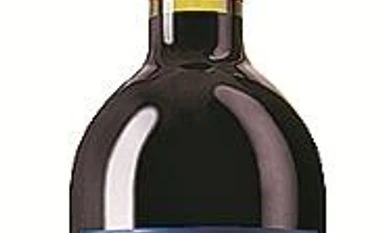
The Brancaia IL BLU 2011 (92 points, Rs 9,650 in Bengaluru) is a “Super-Tuscan” and stands out for both its complexity as well as smoothness. I got aromas of cherries, plums and spices, a full-bodied mouthfeel, silky tannins (after some aeration), tobacco and minerality at the long, lingering finish. Wow!
Alok Chandra is a Bengaluru-based wine consultant

 "The spirit of Italy")












 Connect with us on WhatsApp