Think like a CFO

What the authors do offer is the valuable experience of being in six different masterclasses
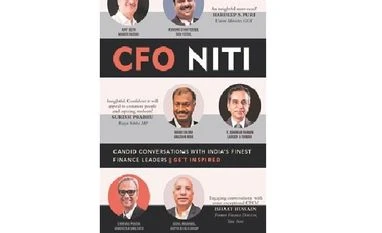
CFO Niti
(Book Cover) CFO Niti
Chintan Girish Modi
5 min read Last Updated : Aug 26 2021 | 10:38 PM IST
CFO Niti
Author: Pramod Bagri and Sandeep Kumar
Publisher: Konark Publishers
Pages:336
Price: Rs 995

What does the role of a Chief Financial Officer (CFO) entail? How has this role evolved over time, and across sectors? Who is a good candidate for this job? How does this person fit into the overall structure of an organisation? If you are interested in these questions, read Pramod Bagri and Sandeep Kumar’s book CFO Niti: Candid Conversations with India’s Finest Finance Leaders.

Also Read


Mr Bagri is a chartered accountant and data analytics professional working with CFOs to “carve out and implement their digital finance agenda powered by automation, analytics and artificial intelligence.” Mr Kumar is the founder and CEO of Torre Capital, a private investments platform. He has also worked in the fields of strategy and digital consulting.

It is structured as a set of interviews with six CFOs — Ajay Seth of Maruti Suzuki India Limited, Koushik Chatterjee of Tata Steel, Raghava Rao of Amazon India, R Shankar Raman of Larsen & Toubro Group of Industries, Srinivas Phatak of Hindustan Unilever Limited, and Sushil Agarwal of Aditya Birla Group. All of them are men. Does this reflect the state of affairs in corporate India? Do people of other genders aspiring to be CFOs face any specific barriers? The book does not address these issues.

What the authors do offer is the valuable experience of being in six different masterclasses. In the introduction, they write, “We expected the CFOs to give us some short narration of their life events. However, we were in for a pleasant surprise as they opened their heart and life, including very interesting anecdotes, initial successes and failures, and what they learned along the way. They wanted to make sure the readers understood their choices and the context behind them.”

Each chapter has six elements —“Fireside Chat”, “CFO Office Demystified”, “Getting Personal”, “Key Takeaways” and “Extra Shots”. You will get to know about their academic backgrounds, bosses, mentors and families. You will learn about the books they read, the movies they watch, and the outdoor activities they participate in. You will also see photographs highlighting key moments from their careers, and find blank spaces to jot down your own reflections after reading the interviews.

Another strength of this book is the fact that the CFOs featured here have grown up, studied and worked in Delhi, Burnpur, Ludhiana, Vijayawada, Chennai, Hyderabad, Lucknow, Chiplun, Mumbai, Sri Ganganagar and various other parts of India. They have gained from immersing themselves in the culture of each place. Their formative childhood experiences at home and school, their college and university education, their hostel life, and on-the-job training, have shaped their work ethic.

This book will give you a broad view of the various processes that CFOs are involved in, depending on the size of an organisation — accounting, capital allocation, vetting vendors and forging long-term relationships with them, resource optimisation, risk management, financial reporting, investor relations, competitive benchmarking, and reskilling. CFOs do not have a static job description. They have to breathe life and creativity into their role, based on changes in the market and the company.

Ajay Seth discusses the importance of communicating with “peers and superiors” in a way that assures them of your capabilities and the fact that “you are working for their and of course, the organisation’s, benefit.” Koushik Chatterjee speaks of maintaining equanimity during crisis because, when “the company pivots all business decisions on cashflows and drives cost takeout programmes, it becomes imperative for the CFO to anchor some of these initiatives…to drive the outcomes.”

Raghava Rao talks in detail about the skills that CFOs look for while hiring finance people for their teams. These include knowing how to frame problem statements, draw insights from data, handle situations when data is insufficient, and use conclusions to make effective decisions. He reveals that the finance talent pool in India is not sufficiently skilled “to handle data extraction, manipulation of processing by themselves.” They need colleagues who are analysts “to do the initial data crunching.”

Shankar Raman speaks about the importance of being conversant with the law of the land, and being alert to policy changes and “risks that may happen six to eight years down the line” whereas Sushil Agarwal believes that “we should not fret about what is not in our control, but work on what is in our control.” These statements may sound contradictory but, in reality, they complement each other.

The authors make explicit the common patterns that they saw across stories. All six CFOs had “early access to the seat at the table with the senior leadership”, “qualifications that set their early romance with numbers”, “roles that allowed them to have higher business and people impact”, and “opportunities to handle cash.” This book will benefit finance students, professionals hoping to be CFOs, and existing CFOs from smaller organisations who want to grow in their careers.  

One subscription. Two world-class reads.

Already subscribed? Log in

Subscribe to read the full story →
*Subscribe to Business Standard digital and get complimentary access to The New York Times

Smart Quarterly

₹900

3 Months

₹300/Month

SAVE 25%

Smart Essential

₹2,700

1 Year

₹225/Month

SAVE 46%
*Complimentary New York Times access for the 2nd year will be given after 12 months

Super Saver

₹3,900

2 Years

₹162/Month

Subscribe

Renews automatically, cancel anytime

Here’s what’s included in our digital subscription plans

Exclusive premium stories online

  • Over 30 premium stories daily, handpicked by our editors

Complimentary Access to The New York Times

  • News, Games, Cooking, Audio, Wirecutter & The Athletic

Business Standard Epaper

  • Digital replica of our daily newspaper — with options to read, save, and share

Curated Newsletters

  • Insights on markets, finance, politics, tech, and more delivered to your inbox

Market Analysis & Investment Insights

  • In-depth market analysis & insights with access to The Smart Investor

Archives

  • Repository of articles and publications dating back to 1997

Ad-free Reading

  • Uninterrupted reading experience with no advertisements

Seamless Access Across All Devices

  • Access Business Standard across devices — mobile, tablet, or PC, via web or app

Topics :BOOK REVIEWLiterature

Next Story



