
14 cos approached govt to settle retrospective taxation cases: Revenue Secy
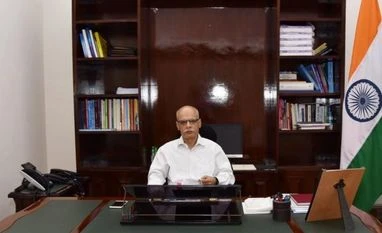
As many as 14 companies against whom retrospective tax demands were raised have approached the government to settle cases, Revenue Secretary Tarun Bajaj said.
 "14 cos approached govt to settle retrospective taxation cases: Revenue Secy")
Explore Business Standard
As many as 14 companies against whom retrospective tax demands were raised have approached the government to settle cases, Revenue Secretary Tarun Bajaj said.
As many as 14 companies against whom retrospective tax demands were raised have approached the government to settle cases, Revenue Secretary Tarun Bajaj said.
The government in August enacted a law to end all retrospective taxation imposed on indirect transfer of Indian assets. The rules under the law seek to withdraw tax demands made using a 2012 retrospective legislation to tax the indirect transfer of Indian assets and also refund the amount paid in these cases without any interest.
Talking to PTI, Bajaj said of the 17 companies against whom retrospective tax demand was raised, barring three or four entities, all have given an undertaking to the government to resolve the cases.
"All of them have approached. There were 17 cases, out of which 3/4 had no trace. We had also sent the order in email, we never got a response. The remaining 14, baring 1 odd, who still has time to file, the remaining has filed... Cairn, Earlyguard have come (for settlement)," he said.
With regard to Vodafone, Bajaj said the UK-telecom company has time till month end to file for settlement. "For some the change (in tax laws) was made through the I-T Act, for some the change was made through the Finance Act."
The company for whom changes were made through Finance Act has time till end of the month to file for settlement, he added.
On October 1, the Finance Ministry had notified rules which prescribed that companies will have to withdraw any pending litigation or proceeding before any forum against the levy of the retrospective tax and also give an assurance that they won't pursue any further claims in the future.
In addition, the companies and any other interested party were required to furnish an indemnity bond committing not to seek damage from the Indian government or its affiliates.
Later on October 13, the Ministry notified a fresh set of rules to facilitate settlement of the retrospective tax dispute with British telecom giant Vodafone Plc.
The 'Relaxation of Validation (Section 119 of the Finance Act, 2012) Rules, 2021', prescribed the forms and conditions for the declaration to be filed by the company for settling its case.
Vodafone had 45 days to approach the government for a settlement.
The case pertaining to Vodafone is different as taxes were sought from the company by validating an October 2010 order of the I-T department that sought Rs 11,218 crore in taxes from the British firm over its 2007 acquisition of Hutch-Essar through a deal in the Cayman Islands.
The Supreme Court had in January 2012 quashed the tax demand but the same was sought to be revalidated through Section 119 in the Finance Act, 2012. A penalty of Rs 7,900 crore was also sought from Vodafone.
Asked how soon the disputes would be resolved, Bajaj said "Cairn is working on it... now the ball is in their court. As soon as they take the cases back, we will give them the cheque. In those cases where there is no money to be refunded, settlement there would be faster."
The Taxation Laws (Amendment) Bill, 2021, enacted in August scraps the tax rule that gave the tax department power to go 50 years back and slap capital gains levies wherever ownership had changed hands overseas but business assets were in India.
The 2012 legislation was used to levy a cumulative of Rs 1.10 lakh crore of tax on 17 entities, including Vodafone, but substantial punitive action was taken only in the case of Cairn.
Last week PTI had reported that Cairn Energy PLC had earlier this month given required undertakings indemnifying the Indian government against future claims as well as agreeing to drop any legal proceedings anywhere in the world.
The government has now accepted this and issued Cairn a so-called Form-II, committing to refund the tax collected to enforce the retrospective tax demand, two sources with direct knowledge of the development said.
Following the issuance of Form-II, Cairn will now start withdrawing all cases in international courts. Once this is complete, the company will be issued a Rs 7,900 crore refund.
(Only the headline and picture of this report may have been reworked by the Business Standard staff; the rest of the content is auto-generated from a syndicated feed.)
First Published: Nov 22 2021 | 6:15 PM IST


