Sanjiv Mehta, chairman and managing director of Hindustan Unilever (HUL), the country’s largest consumer goods company, says that while the June quarter will not be as bad as last year, it could change as the Covid-19 situation evolves. Mehta responds to questions from Viveat Susan Pinto on the shape of things to come for the fast-moving consumer goods (FMCG) market and his firm. Edited excerpts:
With Q4 over now, how do you see the overall economic scenario evolving in Q1 of FY22?
It is important we protect lives and keep the wheels of the economy running. That, to me, is the right approach. As a sector, we came into the new fiscal (FY22) with the same momentum that was visible in the March quarter. However, the last two weeks of April have been turbulent as infections have spread, inducing localised lockdowns and micro-containment measures. There will be an impact on demand because of mobility issues, especially in the out-of-home and discretionary categories. But the containment measures are nowhere next to what happened last year, when everything came to a halt due to the national lockdown.
But, will calendar 2021 be better or worse than 2020?
If we can contain or tame the wave in the next two months, I won’t be surprised to see consumer confidence return. I remain optimistic that 2021 will be better than 2020 because we have visibility of vaccinations this year. Our monthly vaccine capacity, which stands at around 70 million right now, could touch anywhere between 160 million and 200 million by July. If that happens, our ability to inoculate will go up significantly. At the same time, people have to cooperate — maintain social distancing, adopt good hand hygiene habits, mask up, and take the vaccine, if eligible. Taming the virus is like fighting a war; all have to pitch in.
You were at the forefront of consumer revolution in terms of launching new products and improving distribution and reach. Have those plans been shelved for now?
We will not shelve our plans, either from a full-year innovation calendar or capital expenditure point of view. In fact, we have a major initiative going in terms of making our supply chain future-ready. However, if a product were to be launched in May, we would pause and see if the launch should be moved to June or July instead. At this stage, the appetite of consumers to seek new products will be limited and the ability for us to do a flawless launch will be constrained.
There is a view that rural FMCG growth could suffer as the virus spreads. Your thoughts.
That is a possibility we cannot rule out. I believe that the impetus given to rural areas last year, including direct benefit transfers, higher allocation to the Mahatma Gandhi National Rural Employment Guarantee scheme, and raising food subsidies, may have to be reconsidered if the infection spreads deep into the hinterland.
Read this article for free
Register to continue reading premium journalism and analysis from Business Standard.

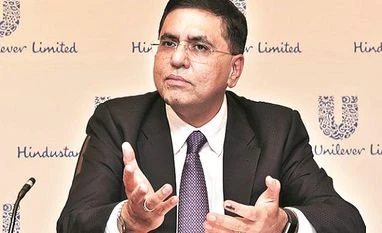 "2021 will be a better year for us than 2020: HUL CMD Sanjiv Mehta")












 Connect with us on WhatsApp