Bernard Charles, vice-chairman and chief executive officer, Dassault Systemes, was in India last week for the company’s flagship event 3DEXPERIENCE Forum. In an interview with Jyoti Mukul, he shares his company’s experience in working with major Indian brands such as Myntra, Ashok Leyland, Tata Motors, Hero MotoCorp, Honda and Mahindra. Edited Excerpts:
Q: How prepared are the Indian manufacturers to adopt 3D printing technology as the Indian market is very cost sensitive?
A: We have been providing solutions to our clients in India for over 20 years. We started in India with high-end companies such as Tata Motors and Mahindra & Mahindra to design cars digitally. Today, our products like SOLIDWORKS provides capabilities to small and medium-sized enterprises. These companies are not using drawings anymore, they want to use 3D designs to make them more efficient. Large companies are using our solution to reduce the complexity of their product while small companies are adopting 3D designs, modelling and simulation. It is now evolving and is true for transportation and mobility and heavy equipment sectors. These technologies are becoming more affordable for planning a city, building a bridge, improve the safety of the infrastructure. Like we have done many projects with L&T on infrastructure, construction and energy. With the help of our 3DEXPERIENCE Platform, L&T can design, simulate and produce those equipment in complex shipbuilding activity and in manufacturing plants.
Q: What are the specific products that have been designed and produced through your 3DEXPERIENCE Platform?
A: The biggest companies such as Mahindra & Mahindra, Volvo Eicher and Ashok Leyland are our clients. So when you see the product physically, I see it on the screen six years before the actual production. Earlier, the companies used to only design products with our software. But now, they design the entire manufacturing plant with our products. Even the equipment and suppliers such as Sandhar and Uno Minda are also our customers. The products you see which are made in India are mostly designed on Dassault Systemes’ solutions. Our clients such as Godrej are also using our software to design products such as washing machines and other home appliances. We have several apparel clients in India such as Myntra, Arvind Lifestyle and Mohan Clothing are our clients for India.
Q: How advanced is the Indian market in terms of 3D printing?
A: Unlike what most people think, 3D printing has existed for more than 30 years. Brands have been using quick prototyping. The difference between quick prototyping and 3D Printing is the machines. The capabilities of the machines right now is to do additive layer manufacturing. Laser and powdered techniques are mastered by several manufacturers in the world. 3D printing machines in Europe, America and Japan are more robotic. The use of 3D Printing in India is growing since it is importing more machines. When we talk about our software in India, we are very advanced in the domain of additive manufacturing as it is the bigger approach than 3D printing.
Q: What is the market size of 3D Printing in India?
A: I know that the top-listed manufacturers in the world are planning to sell 20,000 thermoplastic machines. If you are doing prototyping, you do not need warehouses. We should be able to produce it ourselves at the lowest possible price. It is possible today with all the technology available in manufacturing.
Q: What is the approximate cost that can be saved by using 3D Printing and other manufacturing emerging tech instead of outsourcing and warehousing?
A: The value that 3D printing adds is that you can create one part instead of 10 others, making the designing more efficient and cost-effective. There are extremely critical parts, like ones in Airbus, that are 3D printed and these are the flying parts. One can reduce the weight for the same function with 3D Printing, thereby, reducing the ultimate cost. It can reduce the weight substantially. For spare parts, you can localise the production of spare parts instead of facilitating them by warehouses which will eventually reduce the logistic cost. It also helps to address the minute problems that couldn't be analyzed earlier and helps to provide the most optimal solution.

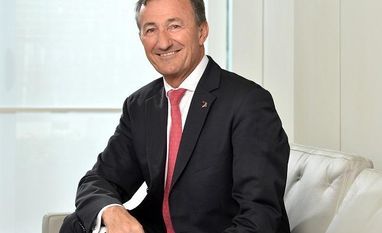 "3D printing moving to additive layer manufacturing: Dassault Systemes CEO")












 Connect with us on WhatsApp