Institutional sales for long have been an opportunity for various businesses to build an alternative source of revenue on the back of volumes. Traditionally, industries like finance, dairy and automobile have been big on institutional sales and see a large number of players benefiting from scale of economies. The latest kid on the block aspiring to make it to the big league of institutional sellers is BigBasket. The online grocery store is looking to capture the HoReCa (hotels, restaurants and caterers) segment with its offerings of meats, private labels, staples, fruits and vegetables (F&V) and gourmet products.
Present in 25 cities, BigBasket launched its HoReCa business in June 2016 and has reportedly raked in a turnover of Rs 100 crore as of March 2017. It serves institutions in eight metro cities including Bengaluru, Delhi and Mumbai, and some of the smaller cities such as Jaipur. The company plans to invest Rs 50 crore over the next 12 months as it expands the business nationally.
Industry dynamics of catering to the business-to-business (B2B) segment are significantly different from those of business-to-customer (B2C). And hence, BigBasket is focusing on acquiring new capabilities to handle large volumes and building requisite infrastructure to serve the HoReCa segment.
To meet the diverse requirements of HoReCa players, the online grocery store has to strengthen its sourcing capabilities. The company is buying F&V directly from farmers. Unlike in the B2C market, here BigBasket needs to further penetrate its supply chain and diversify its sourcing so as to meet the higher demand for international F&V. Primarily, it needs to look beyond the standard offerings of Indian F&V and include more and more international variants in its basket.
“The product range and assortment in institutional selling is different. Apart from that, one also has to focus on building alliances and sales partnerships to tap into the HoReCa segment,” says Abhinay Choudhari, co-founder and head, new initiatives on building alliances and sales partnerships, BigBasket.
According to Rini Dutta, co-founder, Centric Brand Advisors, a player like BigBasket will help bring in hygiene and standardisation as it looks to cater to HoReCa. The company has systematically gone about strengthening its back-end infrastructure including sourcing and supply chain and is in a position to deliver a fresh and wide assortment of products to clients.
The nature of operations in case of institutional selling is different on many levels from that of B2C. One such area is payments.
In direct sales to consumers payment is made on the spot in cash, whereas institutional selling works on credit. Here, the typical payment cycle is seven to 21 days. BigBasket has tied up with banks and financial institutes to facilitate payments.
BigBasket caters to about 1,500 hotels and restaurants including the likes of JW Marriott, Le Meridien and Sheraton in Bengaluru, apart from start-ups such as Oyo.
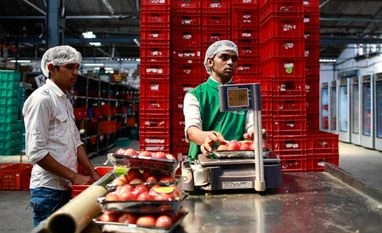
Given the huge volumes involved in institutional selling and varying specifications related to food items, the company needs to set up separate warehouses with sorting and grading facilities. BigBasket plans to open warehouses, each about 20,000-25,000 square feet in size, across eight cities where it caters to different institutions.
HoReCa is not a virgin market. There are a number of local and regional players. Therefore, BigBasket has to offer differentiated services to compete with existing players who enjoy a strong relationship with hotels, restaurants and caterers.
Choudhari is confident that BigBasket can make a huge impact by helping clients consolidate vendors by virtue of its multi-city presence. Further, its technology-based platform can help reduce overheads and help stop leakages by moving away from paper-based payments to a more transparent system of billing.
Dutta observes the B2B space lacks big organised players. It is fragmented. A new entrant like BigBasket has a huge advantage as it can add value to clients with its expertise in artificial intelligence and data analytics. Smaller and regional players lack such capabilities.

 "BigBasket widens offline cart")












 Connect with us on WhatsApp