Cab operator Carzonrent India has ‘geo-fenced’ its fleet to address heightened safety concerns of passengers and the administration following the sexual assault incident in a cab operated by Uber in the capital. This is part of a series of measures the Rs 300 crore car rental firm has taken over the past couple of weeks. “All our cars are geo-fenced. Once the passenger gives the destination, the route gets defined and locked and any deviation is not possible. We have done this in the past week or so,” said Rajiv K Vij, managing director and chief executive officer, Carzonrent.
Geo-fencing is a software program that uses the global positioning system or radio frequency identification to define geographical boundaries. It is a virtual barrier, which can throw up alerts. Technology experts say geo-fencing tools can monitor physical objects enter or exit an established geo-fenced area and provide administrators with alerts when there’s a change in status for a device.
Geo-fencing has been popular in helping advertisers achieve better results through targeted marketing. But of late, this tool has found its other uses. Few months ago, online reports talked about Uber itself was said to have tweaked its algorithm to include geo-fencing , but these were more in the context of fleet management and manage parking in airports rather than from a passenger safety perspective.
Carzonrent is also working on providing each vehicle with a mobile data terminal, which will enable checking of a driver’s identity and credentials through biometrics before he undertakes every trip. “This is to avoid drivers handing over the vehicle to somebody else,” Vij added.
Other female passenger-focused steps taken by the Sequoia Capital-funded firm include establishment of a special desk to check every cab hired by a female passenger. This cab would be monitored for any stops enroute or deviations.
While he did not reveal the amount of investments that had gone into these measures, Vij said his investors, which also include West Bridge Advisors and SIDBI Ventures, have been supportive. “They have all been in touch to understand what can be done to improve the safety of the passenger. They have been concerned and supportive on all the steps.”
A female passenger was sexually assaulted in a cab-affiliated to the San-Francisco based aggregator Uber Technologies on December 5, triggering a crackdown on such services by the administration across the country.
Vij, who still controls about two-thirds of the company alongwith family members, is a little surprised about the hyper coverage the industry is being subjected to in the media after the Uber incident. “The radio taxi industry is over eight years old. There are 25,000 licenced taxis and over 150,000 transactions every day across 12 cities. But it was not on the radar…neither of the media nor of the administrators. Suddenly, it has gone crazy and scary.”
The Carzonrent chief, who himself started off with a capital of Rs 30 lakh and a fleet of 29 cars in 2000, said the belief that Uber had created a new market or expanded the market was a ‘myth’. “The market was always there. Traditionally, there was no intermediary in this business. First time, by calling yourself an aggregator or technology company you are levying an additional cost of 20 per cent on the customer.”
Vij said he believes “the biggest thing innovation must do in the taxi business is to improve customer safety.”
Vij’s involvement with cars and taxi business stretches back to over three decades. He got into the business after stints at Hindustan Motors selling the ubiquitous Ambassadors and International Travel House. “In both places, I had lot of interactions with the cab operators. That’s how I got interested in the business.”
He recalled how when there was no framework for organised taxi fleets, companies like his worked with the lawmakers to create a framework that would offer a better alternative the black and yellow cabs which ran with unverified drivers and old cars. He argued that the radio taxi framework – which provided for minimum fleet, ownership, GPS tracking, tariff, driver verification and responsibility – was laid down with safety and security as primary objectives. After the framework was set, Carzonrent launched Easycabs, the radio taxi service, quickly expanding to most major cities. Today, it has operations in over 39 cities across the country, with Delhi, Chennai, Bengaluru and Mumbai accounting for a significant part of revenues.
The company is investing heavily on Myles, its third vertical, which operates a self-drive service. Vij says this model is gaining traction with driver costs going up considerably.
Vij said once the excitement of finding a cab through a smart phone and the enticement of private-equity funded discounts wane, customers will wake up to the perils of the “surge pricing.” The surge pricing algorithms used by the aggregators can spike up prices depending upon cab demands. “Price is also safety,” Vij said seeking to take the taxi guy vs aggregator debate beyond its present geofences.

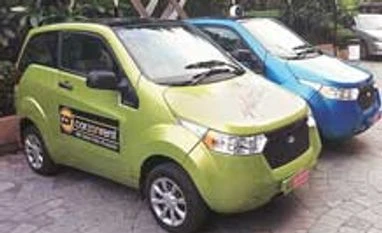 "Carzonrent geo-fences fleet post-Uber")

