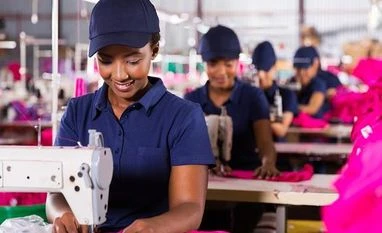
Page Industries is the only one among the top 100 BSE-listed companies that has a workforce comprising 40 per cent women. Of 18,801 employees at the garment franchise, 14,646 were women, according to pay roll for 2017-18 (FY18).
This is higher than in technology giant Infosys, where 36.12 per cent of the workforce, or 73,717, are women. A Business Standard analysis of the top 100 companies between FY17 and FY18 shows, of the 281,116 permanent employees, 63,679 were women.
At Tata Coffee, women comprise 50 per cent of the plantation workforce. At the corporate level, however, their representation falls to 35 per cent.
“At the plantation, women are preferred for their abilities to identify different leaves and because they are more nimble than men,” said Chacko Purackal Thomas, executive director and deputy chief executive officer, Tata Coffee.
In most corporate organisations, women have 30 per cent representation. But, in companies with exposure to textiles, plantation and food items, this easily goes beyond 50 per cent. These are, however, exceptions.
“In a shop-floor operation scenario, the commitment of a firm’s leadership to having a gender-diverse workforce translates to higher representation of women,” said Saundarya Rajesh, founder and president at AVTAR Group, a leader in diversity and inclusion.
She added that by providing a safe workspace, employers are able to hire and retain female talent.
But the answer to what keeps women from equal representation at the corporate level is not an easy one.
“Efforts are on to increase the number of women in the workforce. We have a new female head of human resource,” said Tata Coffee’s Chacko.
Rajesh said in a corporate set-up, financial need of employees was not that acute. Female employees faced strong pressure of sustaining families along with their careers.
“Women’s own intentionality levels (the extent of intention a professional deploys in charting his or her career trajectory) is also critical to career growth and sustainability,” she added.
Mondelez India is another case study for representation of women on the shop floor. It figures on AVTAR’s 100 Best Companies for Women in India. The company’s manufacturing unit in Andhra Pradesh has 300 employees, of which 149 are women.
Three years back, the company consciously set out to build a factory floor with equal representation of women, said Rajesh.
Both Tata Coffee and Mondelez have been conscious in creating a safe workplace for women. Mondelez organises an annual campaign, “Lakshman Rekha”, to teach male and female workers about respecting gender boundaries at work.
Tata Coffee continues with the muster-call practice at its plantation as it opens a platform to have a conversation on issues that are gender-neutral and women-specific.

 "Why India has more women working on shop floors than in corporate offices")












 Connect with us on WhatsApp