3 min read Last Updated : Feb 19 2021 | 11:08 PM IST
Serum Institute of India (SII), which has the world’s biggest vaccine production facility, could be a major beneficiary of the G7’s decision to enhance funding to finance coronavirus vaccine supply to low- and middle-income countries.
India, dubbed the “pharmacy of the world”, furnishes 60 per cent of the world’s vaccines across a variety of diseases. That should compensate for any dwindling in demand in India, amid reports the immunisation effort has stumbled, because of a fall in infections and lack of confidence in a vaccine candidate approved before completing phase three trials.
Smisha Agarwal, a research director at New York’s John Hopkins Global Health Initiative, was quoted by the TIME magazine as saying: “In India, people have an inherent trust in doctors; so when (doctors) don’t turn up to get vaccines, it reaffirms any doubt that the general public might have.”
Signalling an emphatic end to his predecessor Donald Trump’s uncaring foreign policy, Joe Biden, in his first multilateral engagement as president of the US, committed $4 billion to COVAX, a coronavirus vaccination programme co-led by the World Health Organisation for poorer countries. The immediate contribution will be $2 billion. More than 180 nations are yet to administer a single dose of the Covid vaccine. It is estimated $15 billion is required for a worldwide inoculation drive. Before the G7 leaders’ online conference on Friday, Britain had promised $767 million, Germany and France $120 million each, Canada $166 million, Japan $130 million, Italy $102 million and the European Union collectively $600.
Jose Manuel Barroso, chairman of GAVI, the global vaccine alliance that co-leads COVAX, told BBC that Covid vaccination in countries so far deprived will begin next week, with a goal of covering two billion people by the end of the year.
Earlier this month, the UK’s secretary of state for international trade, Liz Truss, visited SII’s plant in Pune. She tweeted: “They have made 100 million doses of the Oxford-AZ (Astra-Zenica) vaccine. Also making some of the 1.3 billion doses as part of COVAX…” COVAX’s enhanced budget following the financial boost given to it by the G7 means more orders for vaccine doses will be placed with manufacturers, with SII benefitting from this as the largest maker of the Oxford-AZ vaccine licensed to it. The rotating presidency of the G7 is currently entrusted to Britain.
The UK’s Prime Minister Boris Johnson proposed donating surplus vaccines to poorer countries to reject charges of vaccine nationalism.

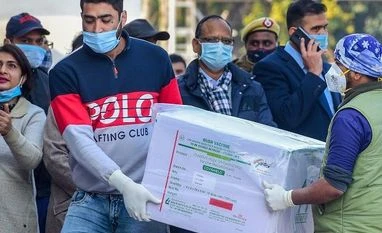 "Covid-19 vaccination: Serum Institute to gain from G7's boost to COVAX")











