Consumer product companies are bracing for another damp festival sales season, as rural spending is expected to be hit due to scanty rainfall. Senior officials in consumer products, two-wheelers, tractors and fertiliser companies warn if the crop fails in the next few weeks, the earnings recovery expected in the second half of the current financial year of companies depending on rural sales might be delayed.
"We are a domestic consumption-driven economy and deficient rainfall is a concern. In some states, rainfall has been really bad. We still have a month to go for the monsoon season to end. But deficient rains will impact crop output, pushing up food inflation which, in turn, impacts domestic consumption," said Saugata Gupta, managing director (MD) and chief executive officer (CEO) of consumer product maker Marico. "For FMCG (fast-moving consumer goods) companies, domestic consumption is important. So, more than China's woes, domestic factors will play a key role in FMCG growth in the medium term."
The warning comes in the backdrop of falling production by key consumer durable sectors. According to Index of Industrial Production (IIP) data, growth of production of consumer durables was 1.3 per cent, -3.9 per cent and 16 per cent in April, May and June, respectively. IIP data for consumer non-durable products also showed flat production growth.
"The cumulative growth in the first quarter was 2.4 per cent and we can see there has not been much buoyancy in production," said D R Dogra, CEO of CARE Ratings.
Rural India contributes close to one-third of sales of consumer products companies, with some firms such as Hindustan Unilever and Dabur recording 45-50 per cent of their sales from rural areas. In the past, any crop failure resulted in lower sales of these companies.
FMCG CEOs say they are yet to fully ascertain the impact of weak rainfall on sales. "The sowing season was good. This was due to good rainfall in June. But July-August has been a challenge in some pockets such as Maharashtra, Karnataka, Rayalaseema in Andhra Pradesh and some parts of the east. If the rainfall continues to be deficient in these parts, there will be stress in these rural areas," said Sunil Kataria, business head (India and SAARC), Godrej Consumer Products.
Sunil Duggal, CEO of Dabur India, said in rain-fall deficient areas, there will be pressure on rural demand and sales. "But in those areas, where rainfall has been good. There will not be an impact on sales. Fortunately, two-thirds of the country received good rainfall this year. We remain cautiously optimistic about the future," he said.
What is worrying the CEOs is that according to the India Meteorological Department, cumulative rainfall has weakened since the last week of July and it now stands at 12 per cent deficient. It said cumulative rainfall was in deficit for all regions, with serious deficit in south India followed by central India region. Sub-division wise, the area with normal or excess rainfall has now dipped to 64 per cent of the total area. While some states are grappling with scanty rains, Assam is under water due to heavy flooding, impacting a million people in the region.
This comes in the backdrop of low sales growth of two-wheelers and tractors , especially in rural areas. For example, Honda Motorcycles reported a 15 per cent fall in volumes in August, compared with same month last year. However, rival Bajaj Auto reported a two per cent rise in volumes though the sales of its commercial vehicles fell two per cent.
CEOs of two-wheeler companies said August has not been well and rainfall is indeed a concern.
"Overall, monsoon is lower than our expectations," said Pawan Munjal, chairman, MD and CEO of Hero MotoCorp. "Parts of the country have had very good rainfall. But some states in the south and west faced deficit. It will be a concern. As we are spread out across the country, we hope to balance out sales. In spite of whatever the environment, we are bullish about the festive demand."
Another key rural spending indicator is tractor sales. For August, Mahindra & Mahindra (M&M)'s tractor volumes declined 22 per cent on a year-on-year basis to 11,699 units.
Pawan Goenka, executive director at M&M, said: "Monsoon deficiency is a concern. August has been one of the worst months in terms of rainfall in more than two decades. We were earlier quite optimistic and there was a good feeling. There is still three weeks of monsoon left and something good may happen. Right now, there is a concern that monsoon may be a dampener for the industry. Therefore, the kind of growth we were expecting may not happen. We are entering festive season soon. We have to wait and see what happens. The tractor industry will see effect of low base effect in second half of the financial year."
Officials of Aditya Birla Group, which has a sprawling fertiliser business, said the impact of scanty rainfall will be lower in north India, given the strong irrigation infrastructure facility in the region.
"Agriculture GDP (gross demestic product) was almost flat last year. In case the monsoon does not recover in September, this will be the second consecutive year of poor monsoon and will impact agriculture produce. Declining rural wage growth along with slowdown in agri-economy may impact the sectors, which are heavily dependent on rural consumption," said Sushil Agarwal, wholetime director, Grasim.

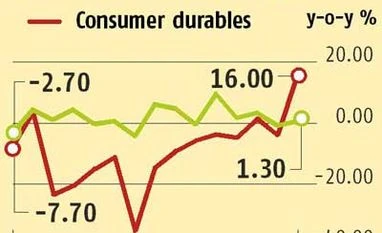 "Deficient rains could delay recovery, warn chief executive officers")


 Connect with us on WhatsApp