eInfochips, Toshiba to jointly build chips for Google's modular phones
Launch starter kit for module developers for Spiral range of modular phones by Google
BS Reporter Ahmedabad Ahmedabad-based tech firm eInfochips has tied up with Toshiba to jointly build and design chips for 'Spiral' range of Google's first modular smartphones. Modular phones are customisable smartphones wherein users can add or remove hardware-cum-software modules based on their requirement.
The firms have jointly developed chips for the base plate of the smartphone as well as chips for potential modules. Among the Spiral range of phone, Google is likely to launch Spiral-3, the third edition of the modular smartphones by mid-2015, it has been learnt. The third edition Spiral-3 is a modular mobile phone prototype under Google's 'Project Ara'.
Explaining the phone, Shardul Kazi, Senior Vice President and Chief Technology Officer, Toshiba USA (TAEC) and Pratul Shroff, CEO and Chairman of eInfochips said that the mobile phone will provide the ease of modifying hardware parts as per user preferences.
The modular smart phone will have basic configurations similar to other smartphones.
However, magnetic-plate based hardware modules as additional features can be inserted to the smartphone's body. "This will enable companies and individuals to design and innovative modules. This will be much similar to what emergence of mobile applications did for millions of software developers," Kazi explained.
The smartphone will have Android platform and will come in three different sizes whereas the modules, categorized in three dimensions with 1x1 inch, 1x2 inch and 2x2 inches, will be certified by Google.
The patent and IPR rights of the phone will remain with Google.
According to Shroff and Kazi, already 20-30 large global corporations are working for different modules including camera, memory, display, speakers among others.
On the other hand, the starter kit has been prepared to assist engineers and tech firms engaged in IT and hardware solutions to get into module development.
"These kits will be useful for module developers to design and develop modules for Spiral-3. So far several companies have shown interest for the Starter Kit, which would cost around $ 40. With the help of this kit, engineers would be able to develop innovative modules for Spiral-3," said Shroff.
Elaborating on Google's Project Ara, Kazi said that the project was aimed at providing cheap and customisable smartphones to the masses.
"Modular smart phones would allow users to adopt different modules on a smart phone. These can be bio-censors for doctors, additional speakers for entertainment and modules for industrial use and consumer use too," he added.

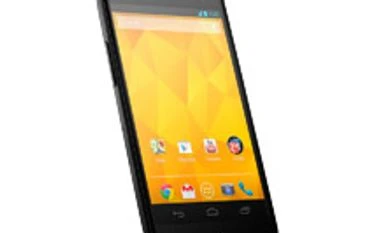 "eInfochips, Toshiba to jointly build chips for Google's modular phones")


 Connect with us on WhatsApp