Fair or unfair? Men with a view on Adani, Tata compensatory power tariff

Long drawn tariff tussle, for which petition was first filed in 2012 also saw political influences
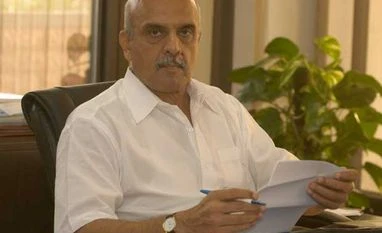
Pramod Deo, chairperson, Central Electricity Regulatory Commission
Deo says Centre has not delegated or otherwise prescribed any power in Appropriate Commission to grant compensatory tariff
Amritha Pillay Mumbai
Last Updated : Jun 09 2017 | 10:38 AM IST
S Jayaraman, a former member of the Central Electricity Regulatory Commission (CERC), is a happy man. The retired official was perhaps the sole member against granting a compensatory tariff of any kind to Adani Power and Tata Power.

“In my view, there is no scope either under the Power Purchase Agreement (PPA) to establish a grant relief mechanism to the petitioner as prayed for. The petition lacks merit and is liable to be dismissed,” Jayaraman wrote in a 15th April 2013 note dissenting to a CERC decision to allow for a compensatory tariff. Jayaraman was part of a five-member team from CERC who decided on the matter.

Early this month, the Supreme Court (SC) ruled against allowing for a compensatory tariff for the two companies on the grounds of changes in international regulations. SC, however, allowed for a scope to grant compensatory tariff related to changes in domestic regulations.

“Jayaraman was the only member in the entire tussle against the idea of giving a compensatory tariff,” said one of the legal representatives of the state distribution companies involved in the tussle. Gujarat, Haryana, Punjab, Maharashtra and Rajasthan were the five states sourcing electricity either from one or both the Mundra–based power plants.

“This was a competitive tariff adopted under a global tender, it was a conscious decision (of developers) and a commercial judgement. For me it did not look fair,” Jayaraman told Business Standard.

While Jayaraman stood out for his refusal to allow for any compensation, the entire compensatory tariff tussle has also seen big names like Lawyer-politician Prashant Bhushan and Deepak Parekh, chairman of HDFC, play an important role. 

Bhushan has acted as the legal counsel for Dakshin Haryana Bijli Vitran Nigam. “Of the states, Gujarat and Haryana were two states which put up a good fight even at the hearings,” said one of the various people who has been actively involved in these hearings. A cursory glance through the minutes of the special committee meetings further vets this remark, with Gujarat and Haryana offering various alternatives to reduce the compensation burden.

Parekh presided as chairman of the special committee formed to decide a compensatory tariff formula for the two companies. The committee met in a series of meetings held between various stakeholders and the lenders between May and July 2013, before submitting a final report in August 2013 to CERC. Parekh could not be reached for a comment on the story.

The minutes of one of the committee meetings for Adani Power read: “After the presentation, the chairman (Parekh) explained to the committee that the developers are also making significant sacrifice in terms of under-recovery in capacity charges. To find a sustainable solution to this problem is in the interest of the energy sector at large.”

One man who may still be worried about the recent SC order is Pramod Deo, under whose chairmanship; CERC passed the first order laying the groundwork for a compensatory tariff. Deo is quick to add the compensation under the first CERC order was allowed not for force majeure or change in the law. 

“Nobody could run a power plant at losses, I was greatly guided by what happened at Enron, now called Dabhol, even today it is facing problems. It is public interest, with 80% of financial institutions interest,” he told Business Standard.

The long drawn tariff tussle, for which petition was first filed in 2012, has also seen its share of political influences. “When the first judgment came, though states participated in the special committee meetings, bureaucrats, as some states were going to poll, could not have agreed to these clauses. The special committee report itself was not signed by the bureaucrats,” said a person directly involved in these proceedings.

One subscription. Two world-class reads.

Already subscribed? Log in

Subscribe to read the full story →
*Subscribe to Business Standard digital and get complimentary access to The New York Times

Smart Quarterly

₹900

3 Months

₹300/Month

SAVE 25%

Smart Essential

₹2,700

1 Year

₹225/Month

SAVE 46%
*Complimentary New York Times access for the 2nd year will be given after 12 months

Super Saver

₹3,900

2 Years

₹162/Month

Subscribe

Renews automatically, cancel anytime

Here’s what’s included in our digital subscription plans

Exclusive premium stories online

  • Over 30 premium stories daily, handpicked by our editors

Complimentary Access to The New York Times

  • News, Games, Cooking, Audio, Wirecutter & The Athletic

Business Standard Epaper

  • Digital replica of our daily newspaper — with options to read, save, and share

Curated Newsletters

  • Insights on markets, finance, politics, tech, and more delivered to your inbox

Market Analysis & Investment Insights

  • In-depth market analysis & insights with access to The Smart Investor

Archives

  • Repository of articles and publications dating back to 1997

Ad-free Reading

  • Uninterrupted reading experience with no advertisements

Seamless Access Across All Devices

  • Access Business Standard across devices — mobile, tablet, or PC, via web or app

Next Story



