Fiat drives itself to the finish line as new emission norms kick in

Long after the iconic Italian auto brand went off the road in India, it is all set to become history
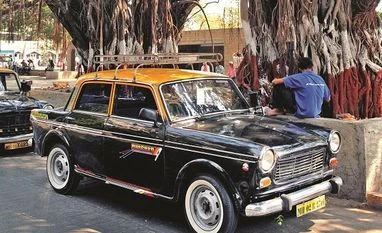
fiat
fiat
Shally Seth Mohile Mumbai
Last Updated : Feb 06 2019 | 11:04 PM IST
There aren’t too many brands in India’s 56-year-old motoring history that have had their epitaph written as many times as the iconic Fiat. Thanks to its chequered past, the local arm of the Italian carmaker has found itself in the dumpyard many times over—but now come 2020, as the new emission norms kick in, it is time for the last sign off. 

Even this time around, if company insiders are to be believed, “it’s only a pause,” and not an exit from India. A temporary lull before Fiat firms up a plan to bring out the next generation models that can meet the advanced safety and fuel emission regulations. A Fiat Chrysler Automotive (FCA) spokesperson declined to comment for the story.      

While the list of brands going off the road in 2020 is long, it is Fiat’s impending demise that has caught popular attention. So what is about the brand that continues to engender interest? Heritage, history and the way it touched lives of millions in its various avatars; be it the Premier President and Premier Padmini (1970s) or the more recent Uno, Siena, Palio, Petra, Avventura, Punto and Linea (1996-till date), the brand ticks all the boxes on the nostalgia front. 

However, despite the romance around the car and its early models, Fiat in India will also be remembered as a brand that frittered away the first mover advantage. “It is yet another case of a legendary brand, being mismanaged. Purely out of lack of focus on what the Indian consumer  wants,” says Avik Chhatopadhyay, co-founder at Expereal, brand consulting firm.

The company faltered on many fronts—it found itself edged out of the market  because of high prices, for bringing obsolete offerings such as the Uno, which was nearing the end of its life-cycle when it was introduced and so on. Fiat misread the market even as rivals from Japan and Korea were quick to learn and capitalise on the opportunity. While the company did make an effort to correct course with the launch of the Linea and Punto models (2008), it was too little too late. By then the car market in India was already maturing and had reached the 1.2 million mark and every global carmaker had a wheel in the mix. 

The other problem was a shoddy and apathetic after sales service record. The brand’s global woes also came home to roost and despite several attempts, Fiat never really found a way back from the brink. The fact that Fiat in India was writing its final chapter however was evident when FCA India was formed in 2012 and the new company decided to focus on the Jeep brand. It will have to pump in at least Rs  4,300 crore to replace the ageing line up of Fiat models, as per reports.  Given Fiat’s weak positioning in the market, it doesn’t merit such a mammoth investment. Therefore, the company will have no choice but to phase out Fiat models from India. 

Fiat’s current product portfolio, which consists of the Linea and Grande Punto will not comply with the upcoming stricter safety and emission regulations. The company has made minimal investment in these ageing models, which have been on sale for around a decade. Therefore, investing in upgrading the Linea and Grande Punto, which are well beyond their lifecycle and whose combined sales dipped to 102 units in 12 months (from December 2017-November 2018), has become pointless.  

Fiat also lost out on telling its brand story to a new band of consumers. Chattopadhyay says Fiat did try through interesting experiments like the Fiat Cafes but that was only a “third of the business plan which they got right. The balance was missing or deficient.” The agreement with Tata Motors which was part of a global plan to stitch an alliance with local companies to get scale and access to network didn’t work either.  “Knee jerk arrangements with the likes of Tata Motors would never have helped as they are two distinct brands and cannot be effectively marketed by the same people. They can only be discounted and pushed out of the showrooms,” points out Chattopadhyay.  

“The discontinuation of brand Fiat from India has been a foregone conclusion," said Puneet Gupta, associate  director at I.H.S Markit, a sales forecasting and market research firm adding that it makes little sense to revive the brand and pump fresh investment given its troubled past.  

At the core of the brand’s tragic fall however was the lack of interest by the brand’s custodians, say experts. The management got swayed by the engine supply business to carmakers. “They saw salvation in the engine business, actually letting the vehicle business flounder,” Chattopadhyay said. And the brand found itself kicked to the kerb. 

One subscription. Two world-class reads.

Already subscribed? Log in

Subscribe to read the full story →
*Subscribe to Business Standard digital and get complimentary access to The New York Times

Smart Quarterly

₹900

3 Months

₹300/Month

SAVE 25%

Smart Essential

₹2,700

1 Year

₹225/Month

SAVE 46%
*Complimentary New York Times access for the 2nd year will be given after 12 months

Super Saver

₹3,900

2 Years

₹162/Month

Subscribe

Renews automatically, cancel anytime

Here’s what’s included in our digital subscription plans

Exclusive premium stories online

  • Over 30 premium stories daily, handpicked by our editors

Complimentary Access to The New York Times

  • News, Games, Cooking, Audio, Wirecutter & The Athletic

Business Standard Epaper

  • Digital replica of our daily newspaper — with options to read, save, and share

Curated Newsletters

  • Insights on markets, finance, politics, tech, and more delivered to your inbox

Market Analysis & Investment Insights

  • In-depth market analysis & insights with access to The Smart Investor

Archives

  • Repository of articles and publications dating back to 1997

Ad-free Reading

  • Uninterrupted reading experience with no advertisements

Seamless Access Across All Devices

  • Access Business Standard across devices — mobile, tablet, or PC, via web or app

Next Story


