
For ad rates, English dailies' premium over Hindi has halved: Girish Agarwal
Interview with Director, Dainik Bhaskar group
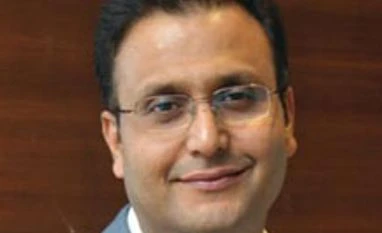 "For ad rates, English dailies' premium over Hindi has halved: Girish Agarwal")
Explore Business Standard
Interview with Director, Dainik Bhaskar group
Dainik Bhaskar is one the largest newspaper groups in India, with 67 editions in three languages across 12 states. Last month, the group entered Bihar, launching a Patna edition. Girish Agarwal, the company’s director, talks about his growth philosophy with Krishna Kant. Edited excerpts:
How is the environment in the newspaper sector? I remain optimistic about print despite challenges such as rise of online medium but we are not a prisoner of a medium. We could make a switch to internet once it acquires a critical mass.
How do you assess the threat from internet given that every second reader now carries a smartphone or a tablet?
There is too much hype about internet but let’s look at the numbers first. As of now, the total internet or broadband penetration in India is to the tune of 7 per cent. And if you segregate metro and rest of India, this number goes down to 3 per cent. It will take years for this number go to 30-35 per cent which is the critical mass.
Secondly we need to understand what people consume online. I firmly believe that we are not in the business of newspapers but in the business of communicating news. Paper just happens to be a vehicle. We tomorrow we will be selling news on tablet or computer or the smart phone. We are preparing ourselves to make a transition to that environment.
But can you make money online the way you are used to make by printing and selling newspapers?
We don’t make money by selling newspapers but by selling ads in our newspapers. Advertisers give ads because millions of people chose to read our papers. The day we start getting a similar mileage online, advertisers will move online. But that is at least 10 to 15 years away. In the meanwhile, we are trying to improve our online presence and dainik bhasker is already one of the most visited news portal in India.
The biggest Achilles Heel for newspapers is to attract new readers in their network, isn't it?
The problem in India is historically newspaper penetration in India has been very low. There were at best one or just two newspapers in most markets and incumbents hadn’t invested in product or market development. Our growth strategy has been to grow the market and expand readership by customising the content and making it more relevant to the reader in that city or region. For example in the recent case of our Patna edition, the total market expanded by nearly 40 per cent on the day of our launch. We did the same in Rajasthan, Gujarat and Maharashtra.
You now have over five dozens editions. How much do you leverage content from one edition to the other so as to minimise the edit cost.
Our edit philosophy has always been to local as much as possible. We have a national basket but then it is left to the state editor to pick and tweak the story to suit the requirement of their editions. There is no fixed policy as to the ratio of national vs local content.
Secondly, all state bureau have their own reporters in key news centres such as Mumbai and Delhi. All of them cover national events independently and the same story may appear differently in different state edition depending on the preferences of the respective state and unit editors. We produce nearly 3000 pages of contents every day and most of these pages are unique. It is a wrong perception so say that by going national you can leverage national content and scale-up your investment in editorial resources.
First Published: Feb 05 2014 | 12:49 AM IST

