Recently, Sajjan Jindal-controlled JSW Steel announced its first-quarter numbers. Despite a slow market and uncertainty over sourcing of critical raw material like iron ore, the steel-maker surprised analysts by reporting a consolidated net profit of Rs 656.49 crore against a loss of Rs 381.82 crore a year ago. Not just this, the company also managed to surpass forecasts on operating cost and sales: JSW recorded a 13 per cent increase in sales volume to 2.9 million tonnes year-on-year, against a demand growth of 1 per cent in the sector.
At a time when the sector is plagued by a demand crunch and raw material (coal and iron ore) shortage, JSW's performance has caught the attention of investors. Over the past year, its share price has improved from Rs 540 to Rs 1,275. Analysts attribute JSW's turnaround to higher output of value-added products, backward integration at its unit in Dolvi (Maharashtra) and falling prices of coking coal. "The average cost of coking coal for the company dropped by $15 during the June-ended quarter to $151 per tonne as international prices corrected. This is expected to decline by a further $15 in the current quarter,"an Edelweiss report says.
The share of value-added and special products in JSW 's total sales increased to 29 per cent in the June-ended quarter from 25 per cent in the year-ago quarter. This is expected to increase further to 33 per cent in the coming quarter. The company has started commercial production of its continuous galvanising line and continuous annealing line with a focus on high-quality automotive steel. "A ballpark figure for margins would be $35 per tonne of additional amount for the value-added products over hot-rolled steel,"explains JSW Director (commercial & marketing) Jayant Acharya.
The capacity at the annealing line, currently operating at 50-60 per cent, is expected to be ramped up to 80 per cent in the second half of this financial year. The galvanising line is already operating at 80 per cent of capacity. In the works is a plant for manufacturing high-grade electrical steel which is used to produce magnetic cores for electrical appliances and machinery. The plant will allow JSW to address India's requirement for electrical steel that is currently being imported.
And with demand too expected to pick up, the picture looks rosy. "So far, we have seen an improvement in demand, to some extent, for smaller and commercial vehicles. In the second half, retail, consumer durables and infrastructure sectors are more likely to witness an increase in demand," says Acharya. According to an ICRA report, reduced coal costs coupled with an increase in the price of end-products in the fourth quarter of 2013-14 enabled the consolidated operating margin of the industry to show an improvement from 20.5 per cent in October-December 2013 to 21 per cent in January-March 2014 and then to 21.9 per cent in April-June 2014, despite an increase in costs like freight. (The industry referred to is a collection of seven large Indian companies in the steel sector, together accounting for over 40 per cent of the domestic capacity).
From vision to action The steel sector, which is banking heavily on Prime Minister Narendra Modi's vision to make India a powerhouse of manufacturing and export, is placed well to gain from the upside, says Acharya. "Once investment in manufacturing picks up, steel intensity will automatically increase," he says. "The potential is huge." Acharya's optimism about the company's performance might not be misplaced. JSW managed to outperform rivals despite the negatives around raw material. After the Shah Committee report on irregularities in iron ore mining, three large mineral-bearing states - Karnataka, Goa and Odisha - banned mining. It was only recently that the activity was reopened in Karnataka and Goa, but in a truncated way. For instance, against the industry requirement of 40 million tonnes of iron ore from Karnataka, only 18-19 million tonnes are available. "Earlier, the company was sourcing 2.5-3 million tonnes from Odisha, but with the mining ban, JSW Steel has resorted to imports of 6 million tonnes from South Africa," the Edelweiss report mentions. "We are importing high grade iron ore with 64-65 per cent iron content with low alumina," Acharya adds.
Captive raw material is crucial for a steel company and that's the reason why Jindal has been pushing for a national policy for the exploration of iron ore. Soon after the Modi government took charge, Jindal, as part of a Confederation of Indian Industry delegation, met the Union steel minister, Narendra Singh Tomar, to point out that the acute shortage of iron ore had forced steel-makers to import the raw material and that this would adversely impact the country's current account deficit. The chief ministers of West Bengal, past and present, have also raised Jindal's concern with the Centre. Buddhadeb Bhattacharjee, the Left Front chief minister who was ousted from power in 2011, had repeatedly urged the Centre for a national iron ore policy. His successor, Mamata Banerjee of the Trinamool Congress, also wrote to Manmohan Singh, the former prime minister, asking for a national policy on iron ore. West Bengal's interest lies in the 10-million tonne steel and 1,600-MW power project proposed by JSW at Salboni in the West Medinipur district. The project has been pending for the last seven years for want of an iron ore linkage.
The Salboni project is part of Jindal's grand plan to achieve annual production capacity of 40 million tonnes by 2025 from 14.3 million tonnes now. Apart from Salboni, Jindal also wants to put up fresh capacities in Jharkhand and possibly Odisha. But JSW needs to have its raw material linkages in place if it wants to expand capacity to such an extent. That's because those with captive raw material source are better poised to deal with the cyclical nature of the industry. Together, iron ore and coal account for more than 80 per cent of the input cost.
Far from ready Though JSW does have some captive raw material, none of these is in production as on date. Like most other steel makers, it too has been scouring domestic and foreign shores for raw material security: coal in Mozambique and the United States and iron ore in Chile. In India, the company has been allocated an iron ore mine at Ankua in Jharkhand. In West Bengal, JSW has a joint venture with Himachal Emta for the Gourangdi ABC thermal coal block. However, in November 2012, the government issued a de-allocation letter for the block on the grounds that progress was unsatisfactory. The matter is now being contested in court.
JSW also has a coal raising and coal supply agreement with the West Bengal Minerals Development and Trading Company for the 2.4 million tonne per annum Kulti-Sitarampur coal block and the 2.6 million tonne per annum Ichhapur coal block. However, the future of these coal blocks could be uncertain with the Supreme Court recently declaring over 200 coal blocks allocated between 1993 and 2009 illegal. The court, which stopped short of cancelling these blocks, also observed that commercial mining could not be carried out by the state governments and that joint ventures were not permissible.
The attorney general has now requested the Supreme Court to exempt 46 blocks from being cancelled, considering that 40 of them have already started production and the rest are about to commence operations. Even if the court agrees to the government's plea, it will bring little relief to companies like JSW Steel which have projects in the "proposed stage" linked to coal blocks. Without raw material linkages, the viability of a project would also be in question. Banks have already lent around Rs 2.65 lakh crore to the steel sector. The matter will come up in court for hearing on September 9. And on the verdict will rest the future of JSW, which has until now succeeded in performing despite a slow market and uncertainty over raw material.

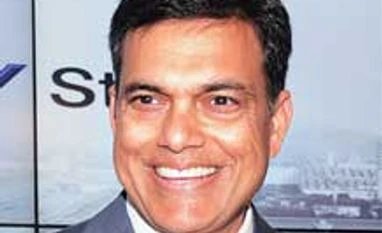 "For JSW, coal shortages could be a growth spoiler")


 Connect with us on WhatsApp