With the coronavirus disease (Covid-19) pandemic disrupting domestic steel demand, Anil Kumar Chaudhary, chairman, Steel Authority of India (SAIL), has chalked out a strong business continuity plan to combat its impact. In a telephonic interview with Aditi Divekar, Chaudhary talks about lessons learnt from the crisis, and the demand outlook for steel in FY21. Edited excerpts:
SAIL has lowered production due to the pandemic, which has hit steel demand. What are the steps being taken to have a strong business continuity plan for FY21?
Firstly, we will be rationalising steel production according to the market demand. For this, blast furnaces — which are more productive and cost effective on techno-economic parameters — would be kept active, while others will remain in standby mode. Secondly, with the help of our unions, we are keeping contract as well as regular labourers on the supportive side. They have assured that if extra work needs to be done once the situation normalises, the workforce will be forthcoming. Thirdly, our officials are in touch with end-users, including dealers and distributors, trying to ascertain the demand size of the market after the lockdown.
How do you see the domestic steel demand in FY21, keeping in mind the uncertainty over when the crisis would take a breather?
I am foreseeing strong demand for steel once the coronavirus impact declines over the next few months. Even if we do not see strong demand immediately, or in the first few months of the fiscal, it may gradually pick up and, in fact, make up for the loss in the balance part of the year. Since the government is also concerned over the country’s economic growth, construction and infrastructure activity will pick up significantly in the latter part of the year.
The pandemic has led to several issues pertaining to domestic logistics and the supply-chain segment. What are SAIL’s learnings?
Our decision to rely on railways, and not roadways, to transport both raw material as well as finished products is bearing fruit. About 85 per cent of our material moves through railways. We did not face any shortage of material despite the lockdown. There is only labour shortage at the contractor's end to unload material, but this situation is not specific to SAIL.
SAIL continues to have a high labour cost when compared to its peers. Have you changed your hiring strategy? How are you handling the employee cost parameter?
Our effort to maximise production and reduce labour cost per tonne is something which will continue. Apart from this, though 7-8 per cent of our workforce retires annually, SAIL is doing only 2 percent fresh hiring against this. This is ensuring cautious hiring. Also, we are looking at bringing down the average employee age in the company to 42 years, from the current 46 years. This would take about 2-3 years.
SAIL has enjoyed monopoly when it came to bagging orders from the Railways. Lately, Jindal Steel & Power has been bagging a few orders as well. What is SAIL doing to keep its market share intact?

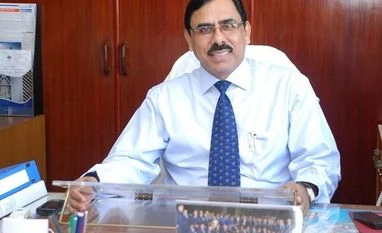 "Foreseeing strong demand for steel post-coronavirus: SAIL chairman")












 Connect with us on WhatsApp