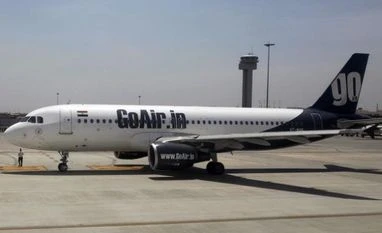
GoAir will decide on capital infusion in the coming year, when it also plans aggressive expansion in domestic airline operations, beside plying abroad.
"Companies like us must look at funds to finance this whole thing (the proposed expansion), as the airline will be four-five times bigger than today. There are many possible ways of doing this. It can be an IPO (initial public offer of equity) or other ways of capital injection. All options are open and we are not in any rush," chief executive officer Wolfgang Prock-Schauer said on Thursday, in response to a question on an IPO.
Starting next year, GoAir will be adding at least 12 aircraft annually. It could initially be more with the launch of international operations, till its fleet size reaches 140 (over the next decade) from the present 23. The fleet will be 26 before March, said the CEO.
On when exactly the company would finalise the capital raising plan, he said, "Not a two-three year horizon but also not a six-month horizon. The calendar year 2017 will have to decide on which direction we are going."
On Thursday, GoAir announced Hyderabad as 23rd destination on its network, connecting it with several cities on the east coast, including Kolkata, beside a flight to Port Blair from here via Bengaluru on Thursday.
Stating Hyderabad was a missing link in their southern network, the CEO said they'd be focusing more on the expansion of domestic operations, as the airline still served only 23 of the 40 top destinations in India.
On international operations, to begin with the summer schedule (June 2017), he said GoAir was allocated traffic rights to all the major neighbouring or nearby countries within the range of an A-320 aircraft (six hours).
These included China, Iran, Saudi Arabia, Thailand and Vietnam. The CEO said the same A-320 aircraft would be used for international flights, as he firmly believed in a one aircraft, one fleet principle.
The 186 seater A-320 is a big aircraft; they'd consider the slightly bigger 230-seater A-321 if necessary, he said.
On demand growth, the GoAir chief felt the current 20 per cent growth rate in the sector might not be sustainable if input costs go up, which was likely. "If you can keep input costs lower, the current growth rate is achievable next year. However, even 50 per cent of the existing growth rate is good, compared to the three-four per cent rate in Europe," he added.

 "GoAir to decide on capital raising in 2017")


 Connect with us on WhatsApp