Govt plans to take InvIT route for BSNL asset monetisation programme

To date, the InvIT market has raised money only from the private sector
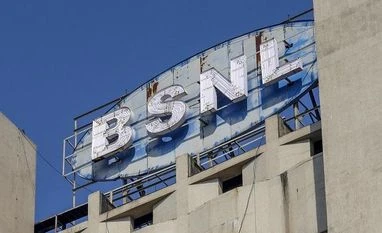
BSNL
It now seems that the BSNL-MTNL asset monetisation programme could become a good part of that estimate
Subhomoy Bhattacharjee New Delhi
3 min read Last Updated : Oct 24 2019 | 10:25 PM IST
To make the asset monetisation programme of BSNL a success, the government plans to take the recently expanded Infrastructure Investment Trust (InvIT) route. This will be the first major use of the route by a public sector company and it follows last week’s announcement by the Reserve Bank of India allowing banks to invest in InvITs. 

Announcing the decision to merge MTNL with BSNL, telecom minister Ravi Shankar Prasad said that both companies would monetise their assets to raise the resources to retire debts, service the bonds and finance network upgradation, among others. He has pegged the total value of assets for monetisation at about Rs 38,000 crore, which is to be carried out over four years. 

The government’s move is a huge confidence booster for the InvIT business.  The InvIT market touched a value of Rs 40,000 crore recently, but so far it has raised money only from the private sector. An informal estimate by the finance ministry had put the possible size of the market at close to Rs 1 trillion by the end of this financial year. It now seems that the BSNL-MTNL asset monetisation programme could become a good part of that estimate. 

A report by Crisil earlier this year had stated that the InvIT market had the potential to reach Rs 2 trillion by the end of March 2021. Set up by a sponsor, InvITs are designed as a tiered structure, which in turn invests in eligible infrastructure projects either directly or via special purpose vehicles. The returns from the project are distributed as dividends at fixed intervals — usually a year. On the one hand, they need financing from banks to replenish themselves, and on the other, they need to create units that will attract investors. Until recently, the RBI had concerns about banks’ exposure to InvITs, and worries about the double financing of loans and the risks of ever-greening of loans that have gone sticky. 

To remove these concerns, Market regulator Securities and Exchange Board of India (SEBI) in July this year amended its Infrastructure Investment Trusts Regulations, 2014, and raised the leverage norms (debt to asset value) for InvITs  to 70 per cent from 49 per cent. This is subject to the trusts retaining a triple A credit rating, along with a track record of six continuous dividend distributions to unit holders. However, this leverage cap is not applicable to privately-placed, unlisted InvITs. The other change is that foreign portfolio investors can now invest in InvITs. This has made life easier for the InvITs, since it raises their liquidity, which can be deployed in more infrastructure assets.

To allow banks to lend to InvITs, the RBI put out a notification last week, saying that this would be possible provided the boards of the banks framed a policy for such investments. “Banks shall undertake assessment of all critical parameters including sufficiency of cash flows at InvIT level to ensure timely debt servicing,” it said. 

One subscription. Two world-class reads.

Already subscribed? Log in

Subscribe to read the full story →
*Subscribe to Business Standard digital and get complimentary access to The New York Times

Smart Quarterly

₹900

3 Months

₹300/Month

SAVE 25%

Smart Essential

₹2,700

1 Year

₹225/Month

SAVE 46%
*Complimentary New York Times access for the 2nd year will be given after 12 months

Super Saver

₹3,900

2 Years

₹162/Month

Subscribe

Renews automatically, cancel anytime

Here’s what’s included in our digital subscription plans

Exclusive premium stories online

  • Over 30 premium stories daily, handpicked by our editors

Complimentary Access to The New York Times

  • News, Games, Cooking, Audio, Wirecutter & The Athletic

Business Standard Epaper

  • Digital replica of our daily newspaper — with options to read, save, and share

Curated Newsletters

  • Insights on markets, finance, politics, tech, and more delivered to your inbox

Market Analysis & Investment Insights

  • In-depth market analysis & insights with access to The Smart Investor

Archives

  • Repository of articles and publications dating back to 1997

Ad-free Reading

  • Uninterrupted reading experience with no advertisements

Seamless Access Across All Devices

  • Access Business Standard across devices — mobile, tablet, or PC, via web or app

Topics :BSNLInvIT

Next Story



