
Govt to revisit Air India disinvestment plan after oil prices stabilise
Union minister Jayant Sinha said that Air India has shown 'considerable improvement' in operational and financial parameters
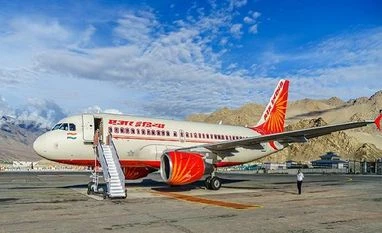 "Govt to revisit Air India disinvestment plan after oil prices stabilise")
Explore Business Standard

Associate Sponsors
Co-sponsor
Union minister Jayant Sinha said that Air India has shown 'considerable improvement' in operational and financial parameters
The government on Wednesday said it would revisit the Air India disinvestment plan after oil prices, foreign exchange and other global economic indicators stabilise.
While asserting that the government remains committed to the disinvestment of Air India, Union minister Jayant Sinha told the Rajya Sabha that the national carrier has shown "considerable improvement" in operational and financial parameters in the recent past.
The government's proposal to sell 76 per cent stake as well as transfer management control of the debt-laden airline to private players failed to take off in May.
Sinha said transaction advisor - EY - had cited 24 per cent government stake and corresponding rights, and high amount of allocated debt as the reasons for not receiving any bids.
Other probable reasons cited by EY were "changes in macro environment, individuals not being allowed to bid, profitability track record, and bidders not being able to form a consortium within a given time period", according to written replies provided by the minister.
The stake sale plan did not attract any bidders when the deadline for submitting Expression of Interest (EoI) ended on May 31 and EY was the transaction advisor.
"In view of volatile crude prices and adverse fluctuations in exchange rates, the present environment is not conducive to stimulate interest amongst investors for strategic disinvestment of Air India in immediate near future.
"The issue would be revisited once global economic indicators, including oil prices and forex conditions, stabilise," Sinha said in a written reply.
Further, the Minister of State for Civil Aviation said near and medium-term efforts would be initiated to improve Air India's performance.
He also said the Air India Specific Alternative Mechanism (AISAM) would separately decide the contours of the mode of disposal of subsidiaries - Air India Engineering Services Ltd (AIESL), Air India Air Transport Services Ltd (AIATSL) and Airline Allied Services Ltd (AASL).
Debt-laden Air India's losses after tax stood at Rs 57.65 billion in 2016-17.
The national carrier received an equity infusion of Rs 271 billion till the end of the financial year 2018 under a bailout package approved by the previous UPA government in 2012.
As part of turnaround strategy for the carrier, Sinha said a number of steps have been initiated to cut costs and losses. These include setting up of a route rationalisation committee to ensure revenue maximisation by continuously looking at load factors, revenue yields and competitor fare structure.
First Published: Jul 18 2018 | 6:18 PM IST

