Grocery and autos: Uber's biggest moat in India

Uber is banking on autos to increase the number of rides and build a successful groceries business
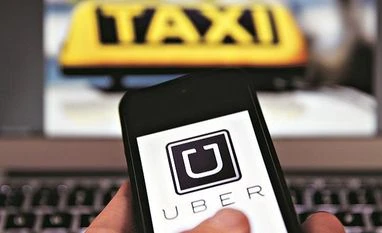
Representative Image
Karan ChoudhuryPatanjali Pahwa New Delhi/Mumbai
Last Updated : Nov 20 2018 | 8:31 PM IST
Two weeks ago, employees in Uber looked at their screens in dismay as the interface that recorded the number of rides showed no upward movement. Cab drivers were on strike in the National Capital Region and Mumbai. The apps were being opened and then consequently shut. But it didn’t mean there were zero rides being initiated on Uber. Never would have senior Uber executives said, “Thank god for those autos.”

When Uber came to India five years ago, it urged customers to upgrade from unreliable autos to air-conditioned cabs. Five years later, Uber needs autos not just to prevent unions from striking against its cab fleet but also to augment demand and build a moat.

A lot has changed in Uber over the past five years. And now for the global cab aggregating giant, its India expansion plans hinge on three key components: local languages, a lighter version of the app and autos. There is a common thread between the three: tier II and III towns, that is, towns with populations of one million or less.

This is another stark departure from Uber’s strategy, which depended solely on urban India to drive numbers. So good were those numbers that it trailed its closest rival Ola by a few percentage points despite its homegrown rival being present in a larger number of locations. 

So now Uber wants more of the market. And it is using autos.

The company launched the vertical almost 10 months ago. Now, Uber is planning to expand to 10 cities and double the number by the first quarter of 2019.  At the time, former employees at Uber said, the move was tactical. It was done not only to increase the number of rides but also to not let Ola build a moat around autos. Now there is new clarity.

“[This] way it increases our user base, it is providing a quality product at a lower price point which opens up a large customer base. By creating a multimodal system, we are encouraging riders to use us more frequently. We are expanding use cases,” said Prabhjeet Singh, head of cities, Uber India and South Asia.

But this is not just a plain and simple play to get the lower-ticket-size customer. The play depends on laying the groundwork for the grocery delivery platform, an idea Uber has been toying with for the past few months.

Autos and groceries together have been tried by the likes of Jugnoo to varying degrees of success. It created logistics issues as well as every trip would bleed money for the startup. It is a problem that Ola faces as well. Even though driver incentives are low, it is difficult for Uber to make money on these trips. Uber will have to educate the drivers significantly. Often auto drivers connected to apps will pick up passengers who hail them down rather than those who have booked through the app. It weakens the use cases and creates a demand-supply gap. And because a surge isn’t possible due to government regulations, auto drivers simply turn off the app during times of high demand. This is a weakness in the model. What Uber will also have to deal with is, change the mindset. 

In small towns where Uber wants to operate, most customers have two wheelers, cities are small and there is less traffic. So, there are few problems to solve. Hailing autos is not a problem. And because distances are small and people do decide to take autos the ticket size will be very small.

But Uber is not worried about lower ticket transactions because it is betting on the fact that volumes could more than make up for it. “The auto price point would be lower than that of car service and that actually is great. Uber’s vision is to create a one-stop-shop for all mobility needs. It is okay for us to have a larger number of low ticket transaction if the volumes of transactions go up,” said Singh.

What Singh doesn’t say is that if these autos could double up to deliver groceries if required, the company could use these volumes to see black on each ride.

All of this stems from CEO Dara Khosrowshahi’s declaration that India is an important market for the company, and has been bullish on creating new products for India. “For me, India is a core market that we are going to really focus on going forward. I’m really excited by the opportunity ahead for Uber in India in the years to come,” he told PTI during a visit to India.

Another little tweak that Uber has done over the last several months is launch a Hindi version of the app. Uber is piloting Hindi and will soon roll out 10 different languages. It has also introduced a lighter version of the app for areas with data connectivity issues. 

“Our rider app, Uber Lite, is less than 5 MBs and great for phones with lower memories and areas with bad data connectivity. This would, in some ways, overlap with the segment of people who would be using auto more,” said Singh.

Currently, Uber has 450,000 drivers, most of them with cabs. Uber now wants almost 500,000 auto drivers on the app. It has big ambitions.

“In certain cities I would not be surprised if autos become bigger than the car business. This comes at a price point that enables much more consumers to use the app,” said Singh.

One subscription. Two world-class reads.

Already subscribed? Log in

Subscribe to read the full story →
*Subscribe to Business Standard digital and get complimentary access to The New York Times

Smart Quarterly

₹900

3 Months

₹300/Month

SAVE 25%

Smart Essential

₹2,700

1 Year

₹225/Month

SAVE 46%
*Complimentary New York Times access for the 2nd year will be given after 12 months

Super Saver

₹3,900

2 Years

₹162/Month

Subscribe

Renews automatically, cancel anytime

Here’s what’s included in our digital subscription plans

Exclusive premium stories online

  • Over 30 premium stories daily, handpicked by our editors

Complimentary Access to The New York Times

  • News, Games, Cooking, Audio, Wirecutter & The Athletic

Business Standard Epaper

  • Digital replica of our daily newspaper — with options to read, save, and share

Curated Newsletters

  • Insights on markets, finance, politics, tech, and more delivered to your inbox

Market Analysis & Investment Insights

  • In-depth market analysis & insights with access to The Smart Investor

Archives

  • Repository of articles and publications dating back to 1997

Ad-free Reading

  • Uninterrupted reading experience with no advertisements

Seamless Access Across All Devices

  • Access Business Standard across devices — mobile, tablet, or PC, via web or app

Next Story



