Grofers makes a move towards retail trading
The company has also been talking to Reliance Fresh and Big Bazaar to be their produce supplier of choice
Patanjali Pahwa Mumbai Grofers has filed an application with the department of industrial policy & promotion, seeking “approval to undertake trading, including through e-commerce in food products manufactured or produced in India”
Grofers, the on-demand delivery service, has also applied for a retail trading licence. In some localities, the SoftBank-backed start-up has been running unbranded retail stores for a few weeks. These stores are learnt to be doing brisk business.
The company has filed an application with the department of industrial policy & promotion, seeking “approval to undertake trading, including through e-commerce in food products manufactured or produced in India”.
Attempts to get in touch with Grofers’ founder and Chief Executive Albinder Dhindsa failed.
This will not be Grofers’ first push into the offline space. Sources said it had been working on strengthening its wholesale operations.
The National Capital Region-based company, an executive said, had contracted with a few dozen farmers in Maharashtra to buy produce directly, package it as their own brand at Grofers-owned warehouses and then deliver it to hubs in major cities.
The company has also been talking to Reliance Fresh and Big Bazaar to be their produce supplier of choice. The warehouses are still being set up and the operations will take three more months to formally take off.
This has caused Grofers to slowly shift away from its hyperlocal business model. Currently, Grofers runs a hybrid grocery delivery model. It uses a central hub and hyperlocal delivery for customers.
“Grofers is probably the most unique company in the space. It sources most of its produce to the hubs and gets all its FMCG (fast moving consumer goods) from retail stores. The idea is to offset the no-margin FMCG products with high-margin produce,” said the executive.
Here is where the problem sets in. Say, a customer orders a kg of potatoes and two packs of toothpaste. One motorcycle rider will be dispatched to the closest hub to fetch these potatoes; another will go to a partner store to get the toothpaste.
The two will meet at a neighbourhood hub and transfer the order to a third rider, who will make the final delivery. This results in Grofers losing money, as it deploys three resources to complete the order.
The start-up says multiple orders are fulfilled at the same time but it is struggling to be unit-positive.
Recently, Grofers had courted the ire of business schools after it turned away students whom it had made offers to in September and then reneged on these.
The company since then has frozen any talking to the media but maintained it had enough cash.

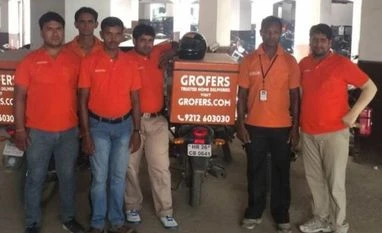 "Grofers makes a move towards retail trading")


 Connect with us on WhatsApp