GST and shift from unorganised sector helping Titan, says MD Bhaskar Bhat

In Q&A, he adds Titan has expanded brands in sarees, is reinventing watches to reach more customers
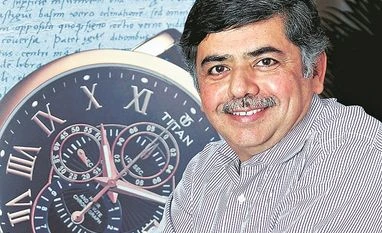
Titan, Titan MD, Bhaskar, Bhaskar Bhat
Titan MD Bhaskar Bhat
Raghu Krishnan
Last Updated : Aug 07 2017 | 2:04 AM IST
Titan, the Tata group's jewellery and watches firm, is gaining from the shift it made from the unorganised sector to organised business. This has also seen consumers buying higher-priced diamond jewellery. Titan has expanded its brands in sarees, is reinventing watches to reach out to more customers and investing in eyewear, Bhaskar Bhat, managing director of Titan, tells Raghu Krishnan in an interview. Edited excerpts: 

Q1 results have seen good growth. What do the results reflect? What is happening in the economy?

I believe the impact of the GST (goods and services tax) has not been the same in all the categories. For example, the FMCG (fast-moving consumer goods) sector is still not (out of the doldrums). The benefit Titan got was due to the GST and because of the unorganised (sector). We are a large sector and it is unorganised...as they get organised, there would be a big benefit for the organised players, which is where we play.

In jewellery, there is seasonality, but there is no downswing. In categories, such as eyewear, both the seller and buyer are waiting it out. In our watch business, we still don't have the full impact. The GST is 28 per cent, but we still don't know the exact excise benefit. In jewellery, the three per cent GST has settled. With the GDP growth being the best in the world, I can say one thing, which is that the really bad times are over. Unemployment is still quite high. However, aspirations are also high. When you get a job and earn money, the first thing you do is splurge. 

How has your e-commerce venture been?

Doing very well; it is going 100 per cent year-on-year. CaratLane is different from the other famous ones. CaratLane’s founder is a jeweller from a jewellery family. All the famous names (in e-commerce) are people who have come together. Both are valid for entering the business. When you are in a category like jewellery, knowledge of jewellery is important. 

Is the growth you saw an urban phenomenon or is it coming from rural areas as well as smaller towns?

In jewellery, particularly, the consumption is pretty high in the larger towns as well. The ticket size is big, splurging on weddings is large. The migration after demonetisation to the category or the organised players has also been high in the urban areas.

What is the consumer sentiment, considering business is moving towards organised players?

When we did our surveys, it was clear people wanted to celebrate, that sentiment has continued. It is not like it has gone up significantly; it is a steady improving sentiment. Demonetisation did not queer the pitch. Fourth quarter was reasonably good for us.

Are you seeing people buying more premium products?

Premium products and even jewellery…ticket sizes are growing at Rs 65,000-75,000 per product. In jewellery, at every price point, there is a customer. If you introduce higher price point, Tanishq becomes a desired brand. We are seeing very good traction in diamond jewellery. I think the market growth is not what we are getting; we are simply getting migration from the unorganised sector.

Are you seeing people investing in jewellery because bank rates are coming down? Similar to what people are doing in stocks?

That is reducing, if you ask me. Golden Harvest (from Tanishq) is a popular scheme, that is for convenience. Overall, the move towards adornment is higher than towards investment. 

How have the other businesses been?

We have been re-crafting the watch business. It is 30 years now…we have seen headwinds for growth. The growth is coming back slowly. We have corrected costs. The cost correction is continuous. Eyewear is still under-penetrated. Growth will come from more people adopting for vision correction. 

A lot of e-commerce players are looking at offline stores...

That is the reality. The rest is all virtual reality. 

When online players started they were aggressive, saying people would buy only online. 

This is a phase that most countries go through. China is one country that has gone through that kind of phase. Without sufficient infrastructure you can’t grow. Online means low price. It starts with that. And then the low price ends up hurting the brands. They offer discounts. Then they begin to fight back. It happened in phones, brands like Samsung refused to provide warranty. We had a struggle for one year. We had to summon the e-commerce players and say that they can't deal with us if they sell below the price determined by us. Watches and several other categories were used to attract customers on their marketplace.

Doesn't offline have huge costs and margins are low?

In online also there is cost. Online players have logistics costs. The reverse logistics is also high as returns are high. That combination and the expectations are many that I will get the product tomorrow.

How is the sarees experiment going?

We have two stores and lots of trunk stores. It is still in the experimental stage. Very good experience so far, but the two stores don't represent the whole of India. We believe we are onto a good thing. It is too early. I would not go aggressive with two stores. We need more stores in Delhi, Mumbai and Chennai. At least three stores more before we go big. 

One subscription. Two world-class reads.

Already subscribed? Log in

Subscribe to read the full story →
*Subscribe to Business Standard digital and get complimentary access to The New York Times

Smart Quarterly

₹900

3 Months

₹300/Month

SAVE 25%

Smart Essential

₹2,700

1 Year

₹225/Month

SAVE 46%
*Complimentary New York Times access for the 2nd year will be given after 12 months

Super Saver

₹3,900

2 Years

₹162/Month

Subscribe

Renews automatically, cancel anytime

Here’s what’s included in our digital subscription plans

Exclusive premium stories online

  • Over 30 premium stories daily, handpicked by our editors

Complimentary Access to The New York Times

  • News, Games, Cooking, Audio, Wirecutter & The Athletic

Business Standard Epaper

  • Digital replica of our daily newspaper — with options to read, save, and share

Curated Newsletters

  • Insights on markets, finance, politics, tech, and more delivered to your inbox

Market Analysis & Investment Insights

  • In-depth market analysis & insights with access to The Smart Investor

Archives

  • Repository of articles and publications dating back to 1997

Ad-free Reading

  • Uninterrupted reading experience with no advertisements

Seamless Access Across All Devices

  • Access Business Standard across devices — mobile, tablet, or PC, via web or app

Next Story



