Headwinds are apparent for the FMCG sector, even though March quarter (Q4) results met expectations or beat them due to a strong burst of consumption in January and February 2021. However, the second wave of the pandemic makes it hard to extrapolate the results.
Economic conditions and sentiment have changed sharply. The second wave will affect Q1FY22. It may also have long-term negative effects on supply chains, with disruptions caused by curfews, lockdowns, etc, not to mention high mortality and unprecedented pressure on health care.
Unlike in the first wave, rural infection rates are very high in 2021. That will have a dampening effect on consumption — rural consumption held up in last financial year, due to a strong performance from agriculture. Every FMCG major has also flagged rising costs as a danger sign. This inflation push is also visible in both Wholesale Price Index and Consumer Price Index.
Hindustan Unilever had a standout Q4FY21. It posted a 41 per cent rise in net profit to Rs 2,143 crore in the quarter. That beat Street and consensus expectations. Net sales rose 34 per cent YoY to Rs 11,950 crore. Ebitda was up 43 per cent, with an OPM (operating profit margin) of 24.4 per cent, which was slightly above consensus expectations. But those figures are misleading since the curfew/lockdown came into effect in late March 2020 and cut activity drastically. Hence, the base for YoY calculations is deceptively low.
However, looking sequentially at Q3, (Oct-Dec 2020) and also at Q4, 2018-19 (Jan-Mar 2019), Hindustan Unilever’s results are still impressive. The revenue is up 19 per cent over Q4, 2018-19, and up 2.2 per cent sequentially. The profit margin has recovered to roughly the same levels as registered in March 2018-19. The margin also improved in Q4 2020-21, over Q3. Other FMCG majors -- such as Britannia and Nestlé India -- had less impressive results but both registered 8-9 per cent revenue growth YoY versus a slight fall in profits for Britannia and a small rise in profits for Nestlé.
Under most circumstances, investors see FMCG as a highly predictable industry. People don’t stop using personal care products, or consuming snacks and beverages. Also, the Indian majors have efficient supply and distribution chains.
But these are extraordinary circumstances. Corporates are attempting to get the workforce vaccinated but supply chain disruptions can well occur, and distribution can also be disturbed by the huge case-loads of the pandemic. Sentiment has clearly suffered as well in April.
The Nifty FMCG Index underperformed through last year with a return of 17.5 per cent (versus 53 per cent for the Nifty) and it has returned a negative 2.7 per cent in the past month. At a P/E of 32-33x, the FMCG sector index is valued slightly lower than the Nifty.

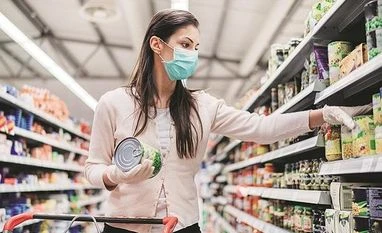 "Amid Covid-19 second wave, headwinds visible for India's FMCG sector")












