Higher excise to hit car, white goods buyers
Industry players were hoping the govt would delay the decision at least till the Budget
BS Reporter New Delhi/Chennai The government’s decision not to extend excise duty cuts on automobiles and consumer durables beyond December 31, will ultimately hit consumers, as companies will pass on the burden to customers. According to estimates, higher duties will add about Rs 2,500 crore a month to the government’s exchequer.
From January 1, excise duty on small cars, scooters, motorcycles and commercial vehicles will be 12 per cent (compared with eight per cent before); sports utility vehicles will attract an excise duty of 30 per cent (up from 24 per cent); mid-sized cars 24 per cent (20 per cent), and large cars 27 per cent (24 per cent). For consumer durables, the new excise duty will be 12 per cent, up from 10 per cent earlier.
According to industry estimates, the price of entry-level cars will increase by at least Rs 10,000 a car, while that for high-end cars could be as much as Rs 3 lakh. For consumer durables, it would range between Rs 500 and Rs 2,000, depending on the product category. Washing machine prices are likely to increase by Rs 500-600, while the price of refrigerators is set to go up by Rs 500-1,500. Television will be costlier by Rs 500-2,000, depending on the category.
The Associated Chambers of Commerce and Industry of India (Assocham) sharply criticised the government’s decision not to extend excise duty cuts. According to Assocham, a higher excise duty regime at a time when manufacturing output has been declining by four per cent, consumer durables reporting a huge drop of 35 per cent, and motor vehicles segment falling 9.8 per cent, will spell “the death knell for consumer demand and industrial growth”.
“This is not surely in keeping with the spirit of ‘Make in India’, whose first priority should be to revive industrial growth through lower cost of production and lower price tag for the consumer so that demand can be revived,” said D S Rawat, secretary-general, Assocham.
Echoing similar views, Manish Sharma, president, CEAMA (Consumer Electronics and Appliances Manufacturers Association) said: “The rollback of excise duty cuts will lead to an increase in product prices passed on to the consumers. While the new government has made promising policies to promote growth of the sector, this move will definitely hit consumer sentiment, impacting sales.” Sharma is also the managing director of Panasonic India and South Asia. Assocham had earlier asked for an extension of the excise sops by a year.
“Nissan had passed on 100 per cent of earlier benefits to the customers. The government’s decision not to extend excise relief will have a definite effect on prices. The auto industry has just come on to the road to recovery and this will have a negative impact,” said Arun Malhotra, managing director, Nissan Motor India.
DASHING HOPES - From Jan 1, excise duty on automobile and consumer durables will be 12% (compared with 8% earlier)
- The price of entry-level cars will increase by Rs 10,000, while consumer durables will cost up to Rs 2,000 more

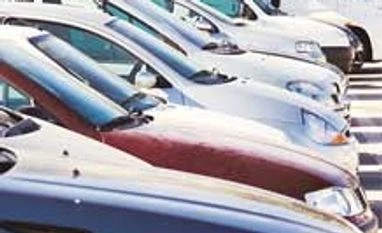 "Higher excise to hit car, white goods buyers")


 Connect with us on WhatsApp