The compact sedan segment has seen some action in recent times, with the pecking order changing with new launches. While players like Tata Motors gained market share and moved up the order, others like Hyundai slipped as demand for its Xcent slowed down. Maruti Suzuki India, however, remained the undisputed leader, growing its market share to over 50 per cent in the 150,000-odd units segment.
The segment, as such, has grown by 8 per cent, year-on-year (y-o-y), between April and August 2017.
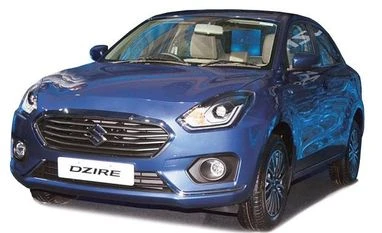
Maruti Suzuki's Dzire brand remained the highest selling compact sedan during the April to August period in 2017 at 75,896 units, up 13 per cent y-o-y. The Dzire brand, launched almost a decade ago in 2008 (initially it was not a sub-4 meter sedan), has managed to remain popular among consumers through all these years. In fact, in August alone Maruti sold 30,934 Dzires, more than double the number it sold in August 2016 (12,780 units). This was mainly due to clearing the backlog of bookings, which had piled up on account of production constraints, informed a source.
Maruti brought in the third generation Dzire with a more premium look in May, and this has helped to boost sales further. Moreover, the Dzire Tour, which sells in the taxi segment, sees significant traction as well. Of the total sales of brand Dzire, around 17,255 units were of Dzire Tour.
Tata Motors, the company that had launched India's first compact sedan by shortening the boot of its Indigo sedan and bringing the car's length to 3988 mm, has done well in the segment in the past year. Data show that from the third spot in the pecking order during April-August 2016 with an 11.5 per cent market share, the firm has moved up to second spot in April-August 2017 riding on the back of its new Tigor sedan.
Vivek Srivatsa, head, marketing, Tata Motors, said that since the launch of the Tigor, the firm had consistently gained share in the segment. "The compact sedan segment is de-growing since the last few quarters. Our volumes in the segment have, however, grown and we have managed to scale up to the second spot from the fourth spot a year back," he added.
Tata Motors’ market share in the segment has grown to 14.6 per cent during April-August 2017 primarily on the back of the Tigor sedan that sold 12,215 units during the period. The Tigor was launched in the end of March this year. The company also sells the Zest sedan and the Indigo CS in this segment. While the Zest has held onto its numbers, selling around 9,000 units (flat from last year), the Indigo CS saw a whopping 87 per cent y-o-y drop in sales to just around 914 units.
South Korean car major Hyundai Motors was at the number two spot in April-August 2016 with a 15 per cent share.
Its share has slipped to 12.7 per cent this year as sales of its Xcent sedan are down 10 per cent y-o-y. Dealer sources said that Xcent had not been able to live up to the success of the model it replaced, the Accent, and sales off late had lost some traction with new launches like the Tigor coming into the market. In fact, Hyundai had launched a refurbished Xcent right before Maruti came out with the third generation Dzire, but the model has not been able to fire up demand as such.
The curious case is of Honda, which has moved up the pecking order while actually losing market share. During April-August 2016 the company enjoyed a 7.45 per cent share of the segment, which fell to 6.19 per cent in the same period a year later. Honda, however, moved from the fifth to the fourth spot this year beating Toyota.
Honda Amaze sales are down 10 per cent y-o-y. In comparison, Toyota Etios sales are down 28 per cent. Toyota's market share in the segment fell from 8.6 per cent in April to August 2016 to 5.7 per cent in the same period a year later.

 "How the pecking order changed in the compact sedan segment")












 Connect with us on WhatsApp