Radia Tremor 6: How Unitech got entangled in the tapes
With the managing director out on bail & being questioned in relation to the 2G spectrum scam, the company is still not out of the mess
Mansi Taneja New Delhi When real estate major Unitech forayed into wireless telephony, many of its investors were concerned. In hindsight, they were right.
Apart from the company losing money, its managing director, Sanjay Chandra, did substantial time behind bars. For the company, the worst part is the story isn’t over yet.
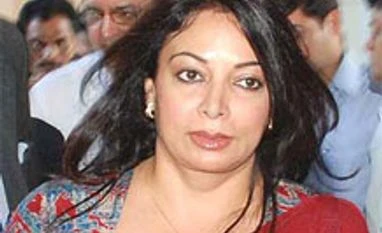
Unitech figures many times in the Niira Radia tapes, in matters relating to manipulation of its shares, default on loans given by Tata Realty and, of course, 2G telecom spectrum allocation by then minister A Raja — issues that prompted the Supreme Court to ask the Central Bureau of Investigation (CBI) to look into these. The apex court wants a probe into the alleged manipulation in Unitech shares in October 2008, when former corporate lobbyist Radia’s phone was under surveillance by the income-tax department.
Her intercepted conversations with former prime minister Atal Bihari Vajpayee’s foster son-in-law, Ranjan Bhattacharya, relate to Unitech failing to clear its dues to the Tatas. In the taped conversation, Radia was heard saying the Unitech brass believed Commerce Minister Anand Sharma would help the company once he secured a good position in the Union Cabinet.
When contacted, a Unitech spokesperson said, “We are pleased to learn the Supreme Court has ordered a CBI inquiry into the hammering of the Unitech stock. In October 2008, widespread malicious rumours were being spread about the financial health of our company, possibly by the bear cartels or market operators who had vested interest in making short-term gains. A similar instance happened with a leading private bank of the country.”
On October 24, 2008, Unitech’s share price plunged about 50 per cent to close at Rs 31.7; the stock had touched its all-time low of Rs 26.6 during intra-day trade. Sources said the crash in the stock followed rumours that the company was defaulting on loan payments. At that time, Sanjay Chandra had said, “There are a lot of malicious rumours being spread by bear cartels that have vested interest in making short-term gains.” Stock manipulation isn’t the only issue Unitech is worried about. In her taped conversations, Radia said Unitech had defaulted on a Rs 250-crore loan given by Tata Realty. The Serious Fraud Investigation Office (SFIO) is investigating why the Tatas gave a loan of Rs 1,700 crore to Unitech and whether it was given for a telecom licence. The SFIO’s final report is awaited.
A Unitech spokesperson said: “We also contemplated seeking a probe into this matter by the market regulator and investigation agencies, but could not take any action based on suspicion. We are thankful to the Supreme Court for ordering an inquiry into this matter, which caused a great monetary and reputation loss to us.”
The court has asked CBI to constitute a team to carry out the investigations and provide a report within two months (by December 16).
In October 2008, Norwegian telecom company Telenor had announced the acquisition of a 60 per cent stake in Unitech’s telecom venture Unitech Wireless for Rs 6,120 crore in an all-cash, four-tranche deal. The deal was to be completed by September 2009. Later, Telenor increased its stake to 67.25 per cent. But after the 2G spectrum scam broke out, relations between the two companies soured and subsequently, Unitech sold its equity to Telenor. In the 2G scam, former minister A Raja, during whose term new telecom licences were given out, as well as other bureaucrats and Chandra, were taken into custody by CBI. Currently, Chandra is out on bail and is facing trial in a special 2G court where the spectrum-allocation case is progressing on a day-to-day basis.
A Rs 250-crore investment by Unitech’s Dutch subsidiary in Pluri, a Mauritius-based company, and its loss within a year is being investigated by the enforcement directorate.

 "Radia Tremor 6: How Unitech got entangled in the tapes")

