Indices give thumbs down to RBI rate cut, expected liquidity measures

Rate cut transmission to the end borrower is what the market is still waiting for.
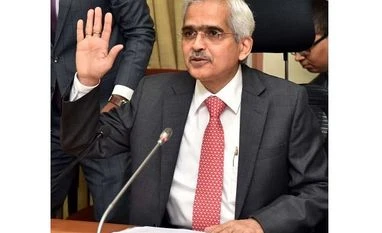
RBI Governor Shaktikanta Das during a press conference in Mumbai on Thursday 06th June, 2019. Photo: Kamlesh Pednekar
Shreepad S Aute Mumbai
3 min read Last Updated : Jun 07 2019 | 12:04 AM IST
The Reserve Bank of India’s (RBI’s) decision to cut repo rate by 25 basis points and changing its policy stance to ‘accommodative’ (indicating no further rate hikes for now) failed to boost investor sentiment in rate-sensitive stocks. Indices such as Nifty Bank, Nifty Financial Services and Nifty Realty fell up to 2 per cent on Thursday.

The street expected more measures on liquidity, and a 25 basis point rate cut was already factored in. Moreover, rate cut transmission to the end borrower is what the market is still waiting for, which would also provide the much needed impetus to private investments and boost overall consumption.

Of the 50 basis point reduction in repo rates in the last two monetary policy meetings in February and April, only 42 per cent, on average, has been transferred on fresh loans while outstanding rupee loans rates have drifted up marginally by 4 basis points as the past loans continue to be priced at higher rates.


What could tie the hands of lenders from passing on the rate cuts are stretched liquidity and dismal deposit growth.

“Liquidity is still a structural issue and deposits are still growing at a slower pace. Thus, unless these two problems are not fixed, transmission of rate cuts is likely to be very gradual,” said Dhananjay Sinha, head of strategy and chief economist at IDFC Securities.

Over the past few months, bank deposit growth has been lower than loan book growth. Even in May 2019, bank deposits rose by 10 per cent year-on-year against 13 per cent growth in bank credit. This indicates high cost for banks or limited lending ability of banks as large chunk of their loan book is financed through deposits.

Average daily surplus liquidity of Rs 66,000 crore in early June and expectations of further efforts by RBI to support the liquidity provide some comfort. However, how the liquidity situation pans out going ahead would be key as market experts say overall system liquidity is still not encouraging. Also, many non-banking lenders have seen liquidity dry up post IL&FS and now DHFL default.


Thus, rate sensitive stocks are unlikely to benefit from rate cuts. However a normal monsoon, government spending would provide some support to consumption demand. 

One subscription. Two world-class reads.

Already subscribed? Log in

Subscribe to read the full story →
*Subscribe to Business Standard digital and get complimentary access to The New York Times

Smart Quarterly

₹900

3 Months

₹300/Month

SAVE 25%

Smart Essential

₹2,700

1 Year

₹225/Month

SAVE 46%
*Complimentary New York Times access for the 2nd year will be given after 12 months

Super Saver

₹3,900

2 Years

₹162/Month

Subscribe

Renews automatically, cancel anytime

Here’s what’s included in our digital subscription plans

Exclusive premium stories online

  • Over 30 premium stories daily, handpicked by our editors

Complimentary Access to The New York Times

  • News, Games, Cooking, Audio, Wirecutter & The Athletic

Business Standard Epaper

  • Digital replica of our daily newspaper — with options to read, save, and share

Curated Newsletters

  • Insights on markets, finance, politics, tech, and more delivered to your inbox

Market Analysis & Investment Insights

  • In-depth market analysis & insights with access to The Smart Investor

Archives

  • Repository of articles and publications dating back to 1997

Ad-free Reading

  • Uninterrupted reading experience with no advertisements

Seamless Access Across All Devices

  • Access Business Standard across devices — mobile, tablet, or PC, via web or app

Next Story



