Is it RIP MTNL?

In a fiercely-competitive market can MTNL stay afloat or is it time we bid adieu to the public sector unit?
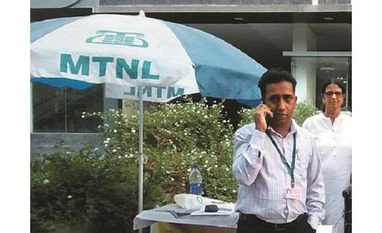
MTNL
If all else fails, the company said, the government should take over MTNL or dissolve
Megha Manchanda New Delhi
3 min read Last Updated : Mar 25 2019 | 12:43 PM IST
Once touted as the policymaker and operator for the Department of Telecommunications, Mahanagar Telephone Nigam Ltd has lost ground and credibility as the public sector telecom operator primarily due to labour unrest and political interference.

In a fiercely-competitive market thanks to Mukesh Ambani-led Reliance Jio along with Bharti Airtel and Vodafone-Idea, can MTNL stay afloat or is it time we bid adieu to the public sector unit?

In 1986, the central government incorporated MTNL to manage and control telecommunication services in two metropolitan cities –Delhi and Mumbai, with the vision of providing telecom services at affordable rates and becoming a complete solution provider.

Experts say MTNL is a lost opportunity as being overstaffed became a huge disadvantage for the troubled PSU.

“MTNL had a great opportunity to consolidate in the two prime circles of Delhi and Mumbai, 3G spectrum was first given to them but political interference is one of the many reasons the company could not achieve what it had set out to,” an industry expert said.

The company now wants to surrender that 3G spectrum, which will give the company Rs 3,500 crore that can be used for running operations, paying the salaries of its 23,000 staff and investment in the landline business, which is doing well.

The sick PSU cannot even order the latest equipment without the government approved tender process, which in itself is a money making exercise, he said.  “If the company was run on meritocracy without political interference it would have certainly done better,” he added.

The company has loans worth Rs 20,000 crore for paying the central government statutory dues. MTNL wants the government to convert these loans into loans with sovereign guarantees with full responsibility of Prinicipal and Interest Payment, which is expected to save the company Rs 2,000 crore annually towards interest payment.

The employees also want the voluntary retirement scheme after the implementation of the third pay revision, which translates into a Rs 300 crore increase in employee benefits towards MTNL. Some 10,000 employees are expected to take VRS, reducing the company’s wage bill by Rs 100 crore.

“Their debt is less compared to that of the private companies and they also have assets. As far as landline and fibre services are concerned the company is doing well in Delhi and Mumbai,” Annie Morees former Member (Finance), DOT said.

“Right now everyone seems to be consolidating, both MTNL and BSNL should revisit this proposal,” Morees said.

Bharat Sanchar Nigam Ltd, another sick telecom PSU is grappling with financial woes and has sought intervention from the telecom department.

Another expert felt that the BSNL-MTNL merger would serve the purpose better as together they will make a stronger entity. MTNL’s merger with BSNL essentially means that the former would be able to expand operations across India on the basis of network utilization.

In its revival plea to the central government, MTNL wanted to venture into fourth-generation or 4G services provided they are fully financed by the government.

The public sector unit also wants the government to monetize its unused or underused real estate assets to spring the company back in the business.

In July-September quarter of the current financial year (2018-19), MTNL's losses grew to Rs 859 crore due to an increase in finance cost and a decline in sales. The employee cost made up for 92.2% of the total cost of the company, which was 29% more than the revenue generated from its operations of Rs 572.83 crore.

One subscription. Two world-class reads.

Already subscribed? Log in

Subscribe to read the full story →
*Subscribe to Business Standard digital and get complimentary access to The New York Times

Smart Quarterly

₹900

3 Months

₹300/Month

SAVE 25%

Smart Essential

₹2,700

1 Year

₹225/Month

SAVE 46%
*Complimentary New York Times access for the 2nd year will be given after 12 months

Super Saver

₹3,900

2 Years

₹162/Month

Subscribe

Renews automatically, cancel anytime

Here’s what’s included in our digital subscription plans

Exclusive premium stories online

  • Over 30 premium stories daily, handpicked by our editors

Complimentary Access to The New York Times

  • News, Games, Cooking, Audio, Wirecutter & The Athletic

Business Standard Epaper

  • Digital replica of our daily newspaper — with options to read, save, and share

Curated Newsletters

  • Insights on markets, finance, politics, tech, and more delivered to your inbox

Market Analysis & Investment Insights

  • In-depth market analysis & insights with access to The Smart Investor

Archives

  • Repository of articles and publications dating back to 1997

Ad-free Reading

  • Uninterrupted reading experience with no advertisements

Seamless Access Across All Devices

  • Access Business Standard across devices — mobile, tablet, or PC, via web or app

Next Story



