IT, ITeS firms pushing demand in office real estate segment
According to a new report, 58 per cent of the total office real estate has been taken up by IT companies in the country
BS Reporter New Delhi The burgeoning information technology (IT) and IT-enabled services (ITeS) sector in India has given a substantial push to the office real estate segment in India. According to a recent report, 58 per cent of the total office real estate has been taken up by IT companies in the country.
In Pune, the IT sector uses as much as 74 per cent of office realty space, followed by Gurgaon (64 per cent) and Bengaluru (57 per cent), says the report Dealing with Explosive Growth: How Tech Occupiers Use Real Estate to Harness Opportunities by Colliers International.
The reason why Bengaluru, Pune and Gurgaon are the preferred locations among tech occupiers is the ability of these cities to attract talent as well as the availability of Grade A buildings at affordable rents.
"There are many similarities between traditional space occupiers and technology tenants. These include an increasing drive to attract the best talent and a focus on cost. Many technology tenants are experiencing strong growth in headcount, which can make long lease terms more difficult. Similarly, the ability to take on more space over the term of the lease is frequently required," it stated in its report.
According to Surabhi Arora, senior associate director (research) at Colliers India, the large requirements typically demanded by technology firms in India mean that the types of buildings required have large floor plates, uninterrupted power supply, ample parking and amenities such as cafeterias and gyms. "In India, there is a greater focus on space efficiencies, but there is also a stronger drive to create environments that are attractive to highly creative, and typically younger employees."
Additionally, the report states as tech-sector tenants grow much faster than those from mature industries, landlords are moving to provide more flexible workspaces and leasing arrangements that can accommodate hard-to-predict changes in employee headcount.
"Ultimately, technology tenants choose a location that allows them to attract the best people. For example, in Singapore, technology firms typically target Premium Grade-A buildings in both CBD (central business district) and Business Parks," the report said.
According to the report, in high-growth markets such as India, occupation trends are more diverse and they prefer to be located in campus style Grade-A buildings in CBD and secondary business district areas. "Key drivers for tech firms clustering in these locations are tenant retention and proximity to clients and vendors. Recently, Hyderabad also emerged as one of the alternative locations, as the city, which was under political stress for a couple of years, is reviving," the report noted. Companies such as Google, Uber and Apple have taken large office spaces in Hyderabad.

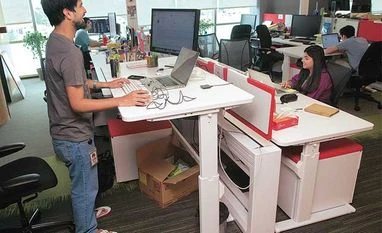 "IT, ITeS firms pushing demand in office real estate segment")


 Connect with us on WhatsApp