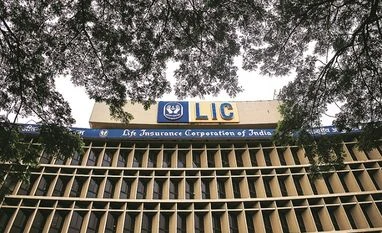
LIC to buy stake in IDBI: When the FSDC was found missing in action

The FSDC has been the weakest body populating the financial sector and needs to be taken apart

LIC, life insurance
The state-owned life insurance company benefited from the 17% Sensex rally during the year. Its profits from equities increased 72%
Subhomoy Bhattacharjee
Last Updated : Jul 01 2018 | 2:09 PM IST
The apex body of the financial sector, Financial Stability and Development Council (FSDC) is missing in action. On Saturday, insurance regulator, Insurance Regulatory and Development Authority gave its approval for Life Insurance Corporation to pick up a 51 per cent stake in IDBI Bank; weeks earlier, the Reserve Bank of India had come out with a blueprint for public credit registries and of course meanwhile the banks are roiled with bad debts. But none of these have made it to the agenda of the FSDC, despite massive cross cutting regulatory aspects that colour each of them. 

The FSDC is chaired by the union finance minister and brings all the financial sector regulators on one table to handle matters relating to financial stability, inter-regulatory coordination, and financial sector development, as its own terms of reference notes.  One would think this is the place where a proposal by an insurance company to buy a majority stake in a bank would be discussed threadbare. The last meeting of the FSDC was in May and there is no indication this was remotely considered. Incidentally the FSDC was reconstituted in May partly because of the exigency created by finance minister Arun Jaitley’s illness to include Piyush Goyal, who has the temporary charge of the finance ministry to be included in it. It has also brought in the chairman of bankruptcy board, the secretary, department of information technology and the revenue secretary on the high table. While no reasons were given for the expansion, their inclusion is meant to suggest this is the body to keep a tab on the financial sector. 

The high table however, has only busied itself in minutiae. This is the reason why the media or the markets gave the changes a minuscule display. FSDC, created in 2010 has just fulfilled its role as a rubber stamp to approve the changes made by regulators and of course, the government as the owner of several key entities in the financial sector. It, for instance, does not take a view or is even kept informed about the quantum of open market operations like a foreign exchange mop up by the RBI. In recent years, it was about the last entity that got to know RBI’s plans to send all high value debt recast loans to the bankruptcy board. Moreover, it is yet to know or even suggest any modifications in the government plan to make LIC become the owner of a public sector bank. The Irda board naturally thought it had done its duty as a finance ministry officer was present on its board that approved the LIC buyout and did not call for a meeting of the FSDC, though the constitution of the body is clear that any one of the regulators can do so to decide on such subjects. 


The IDBI bank buy out is sure to be quoted as a precedence by any entity to get into the banking sector, since it breaks the firewall created by RBI of keeping the ownership of all banks free of investments in other sectors. Whatever be the merits of this proposal, this will be the precedent, that just about anybody will quote in their defence. It is the FSDC that should have laid the ground rules for such an exposure. Yet when it meets, one can be sure a bland report about the deal will be read out in the meeting, to be taken on record. 

FSDC was created in the aftermath of the global financial meltdown in the spirt of similar institutions created in USA to handle regulatory uncertainty. The kerfuffle created between the Securities and Exchange Board of India and Irda around the same time about who gets to control the market for Ulips was the proximate reason for its creation. It took over the role of the high level committee on capital markets created after the Harshad Mehta scam of early nineties. Every time a disturbance hit the financial sector, it was progressively given more room to create a larger noise. Not surprisingly the formation of FSDC was immediately termed as that of a super regulator. As it stands it is neither super and certainly not a regulator. It has been the weakest of the bodies populating the financial sector and needs to be taken apart recognising that it is instead the finance ministry which is the super regulator for the sector.

One subscription. Two world-class reads.

Already subscribed? Log in

Subscribe to read the full story →
*Subscribe to Business Standard digital and get complimentary access to The New York Times

Smart Quarterly

₹900

3 Months

₹300/Month

SAVE 25%

Smart Essential

₹2,700

1 Year

₹225/Month

SAVE 46%
*Complimentary New York Times access for the 2nd year will be given after 12 months

Super Saver

₹3,900

2 Years

₹162/Month

Subscribe

Renews automatically, cancel anytime

Here’s what’s included in our digital subscription plans

Exclusive premium stories online

  • Over 30 premium stories daily, handpicked by our editors

Complimentary Access to The New York Times

  • News, Games, Cooking, Audio, Wirecutter & The Athletic

Business Standard Epaper

  • Digital replica of our daily newspaper — with options to read, save, and share

Curated Newsletters

  • Insights on markets, finance, politics, tech, and more delivered to your inbox

Market Analysis & Investment Insights

  • In-depth market analysis & insights with access to The Smart Investor

Archives

  • Repository of articles and publications dating back to 1997

Ad-free Reading

  • Uninterrupted reading experience with no advertisements

Seamless Access Across All Devices

  • Access Business Standard across devices — mobile, tablet, or PC, via web or app

Next Story