Lupin Pharmaceuticals eyes the next wave of growth in Japanese market

Lupin's Japan story assumes significance as it held on to the highly regulated market when most of its Indian peers quit
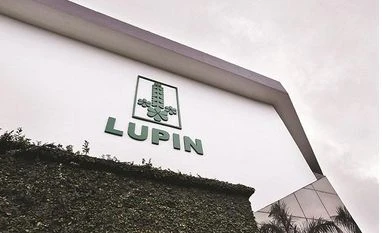
Lupin
Sohini Das Mumbai
Last Updated : Jun 26 2018 | 6:45 AM IST
Mumbai-based Lupin Pharmaceuticals decision to stay invested in the Japanese market, when its peers gave up, has paid off. The firm clocked a 23.4 per cent year on year (YoY) growth rate in Japan sales in 2017-18, highest in the past five years. The firm is readying itself for the next wave of growth in Japan that would come from biosimilars and expects 50 per cent of its Japan sales to come from the speciality business. 

Lupin’s Japan story assumes significance as it held on to the highly regulated market when most of its Indian peers quit. Ranbaxy, one of the first entrants, exited its joint venture (JV) with Nippon Chemiphar in 2009 December. Others like Dr Reddy’s, Orchid Chemicals and Cadila Healthcare too wound up their Japanese business in the following years. 


Fabrice Egros, president, AsiaPac and Japan for Lupin, said, "We entered the Japanese market in the late 2005; at that time it was the second-largest pharmaceutical market in the world. Along with that, the regulatory reforms driven to support generics players and the National Health Insurance also supported the growth of generics to as high as 20-30 per cent. These factors made investing in Japan a natural choice for Lupin.” It made some strategic investments in that country and managed to grow them. Lupin acquired generics player Kyowa in 2007 when it ranked among the top 60 firms in Japan. Egros said in the last 10 years it has transformed to the sixth rank. 

“We have made several strategic investments in the market over the years, including the acquisition of two companies, a portfolio of 21 branded products, and a JV for our biosimilars portfolio. Today, Japan is our third-largest market and a critical base for manufacturing and R&D," he said. 

The Asia-Pacific region contributed around 17 per cent of Lupin’s global sales in FY2017-18 and Japan contributed 80 per cent to its revenues in the region. This is ex India, which is considered a separate region, and not a part of the APAC. With sales of Yen 35,478 million in 2017-18, Japan roughly contributed to 10 per cent of Lupin’s global sales. 

The Japanese government has been pursuing the agenda of promoting generics and has set the target of 80 per cent generic utilisation by FY2020-21. Incentives will remain until this period and then it will switch to biosimilars. Lupin has thus drawn up a plan to build a biosimilars portfolio. It expects to launch rheumatoid arthritis biosimilar Etanercept in FY2018-19 and has tied up with Nichi-Iko for its distribution.


"The current biologics market in Japan is pegged at $13.5 billion and the current health care spends on biologics by the government is around 14 per cent, which is expected to go up resulting in more growth opportunity for us," Egros said. He admitted that in the generics space, owing to government intervention in drug pricing, Lupin expected pricing pressure to continue in the coming fiscal year. “Ideally, we are looking at the share of specialty segment in Japan to reach 50 per cent,” he added. 

Japan opened up to low-cost generic drugs in 2005. Several Indian players had then rushed to enter the Japanese market but later found the going getting tough because of stringent quality standards and other trade related issues. "The regulations are not only stringent but also not transparent at all times. The trade practices too make it difficult for foreign players to operate there, which is why many had gone for joint ventures. On the whole, while it is a lucrative market, some players did not find it profitable," said a senior executive of a company that was once present in the Japanese market.

One subscription. Two world-class reads.

Already subscribed? Log in

Subscribe to read the full story →
*Subscribe to Business Standard digital and get complimentary access to The New York Times

Smart Quarterly

₹900

3 Months

₹300/Month

SAVE 25%

Smart Essential

₹2,700

1 Year

₹225/Month

SAVE 46%
*Complimentary New York Times access for the 2nd year will be given after 12 months

Super Saver

₹3,900

2 Years

₹162/Month

Subscribe

Renews automatically, cancel anytime

Here’s what’s included in our digital subscription plans

Exclusive premium stories online

  • Over 30 premium stories daily, handpicked by our editors

Complimentary Access to The New York Times

  • News, Games, Cooking, Audio, Wirecutter & The Athletic

Business Standard Epaper

  • Digital replica of our daily newspaper — with options to read, save, and share

Curated Newsletters

  • Insights on markets, finance, politics, tech, and more delivered to your inbox

Market Analysis & Investment Insights

  • In-depth market analysis & insights with access to The Smart Investor

Archives

  • Repository of articles and publications dating back to 1997

Ad-free Reading

  • Uninterrupted reading experience with no advertisements

Seamless Access Across All Devices

  • Access Business Standard across devices — mobile, tablet, or PC, via web or app

Next Story


